

The MCAT is losing its grip on dental admissions
Dental school admissions are changing. For decades, the MCAT was the standard for checking scientific aptitude. Now, more schools are dropping the test entirely in favor of looking at the person behind the score.
This change wasn’t sudden. The COVID-19 pandemic played a role, as test centers closed and access to testing became unequal. This highlighted existing concerns about the MCAT's accessibility and its potential to disadvantage students from diverse backgrounds. More fundamentally, schools began to question whether a single test score truly captured the qualities needed to succeed – and excel – in a dental program.
Currently, over 60 U.S. dental schools no longer require the MCAT, according to the American Dental Education Association. This doesn’t mean these schools are lowering their standards; rather, they’re broadening their evaluation criteria. They’re looking for evidence of qualities that aren’t easily measured by a standardized test. We’ll explore these alternative pathways, including the DAT, CASPer, and the evolving landscape of prerequisite coursework, in the sections that follow.
The reality of holistic review
Holistic review is more than just checking boxes on a list. It’s a comprehensive assessment of an applicant’s experiences, attributes, and demonstrated potential to become a compassionate and skilled dentist. Admissions committees aim to understand the whole person, not just their academic record.
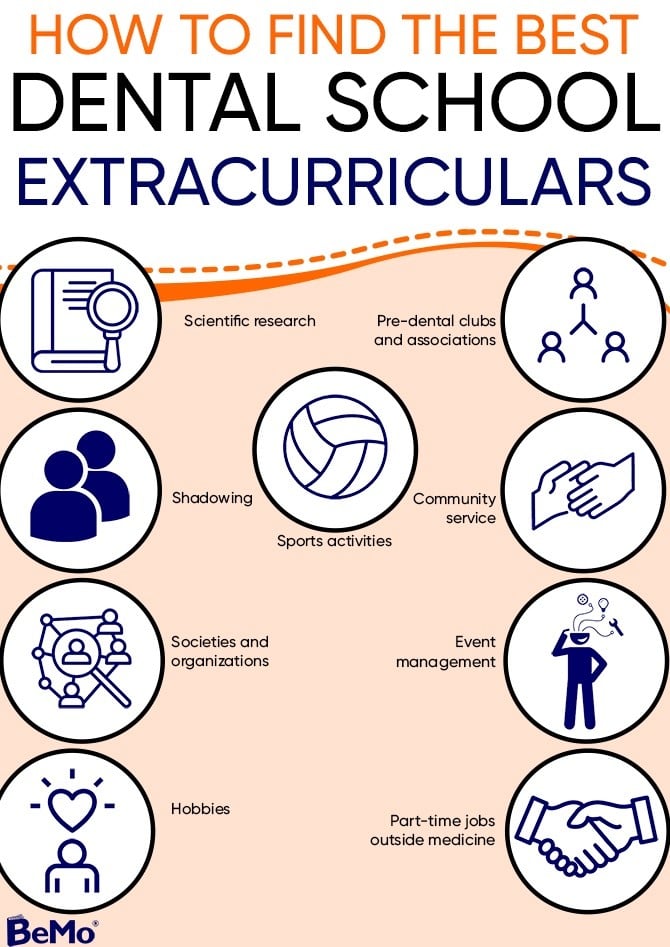
What specifically are they looking for? Experiences that demonstrate empathy are paramount. Volunteering in a healthcare setting, working with underserved populations, or participating in community service projects are all valuable. Leadership roles, whether in student organizations or through work experiences, show initiative and responsibility. Teamwork skills, demonstrated through collaborative projects or extracurricular activities, are also highly valued.
I've found that resilience matters more than a perfect GPA. A personal statement that honestly addresses setbacks tells a better story than one that hides them. Letters from mentors who actually know your character carry more weight than a generic 'A' in chemistry. Grades still matter, but they aren't the whole story anymore.
How the DAT differs from the MCAT
The Dental Admission Test, or DAT, has long been the preferred admission test for many dental schools, and its importance is growing as more schools move away from the MCAT. The DAT is designed specifically to assess skills and knowledge relevant to dental education. It’s comprised of four sections: Survey of the Natural Sciences (biology, general chemistry, organic chemistry), Perceptual Ability (spatial reasoning), Reading Comprehension, and Quantitative Reasoning.
Compared to the MCAT, the DAT places a heavier emphasis on scientific knowledge directly applicable to dentistry. The Perceptual Ability section is unique to the DAT and tests visual-spatial intelligence, which is considered important for dental procedures. The MCAT is broader in scope, covering social sciences and behavioral sciences in addition to the natural sciences. Scoring is different too: the DAT sections are scored out of 30, with a total score out of 100, while the MCAT uses a scaled score ranging from 472 to 528.
Preparation resources for the DAT are widely available, including Kaplan, Princeton Review, and DAT Bootcamp. Many schools that have dropped the MCAT now explicitly accept the DAT, often with specific score recommendations. As of 2024, the DAT costs $525 to register. You can find detailed registration information and test dates on the American Dental Association’s website:
- The natural sciences section covers biology and both general and organic chemistry.
- Perceptual Ability: Assesses spatial reasoning and visual discrimination.
- Reading Comprehension: Evaluates critical reading and analytical skills.
- Quantitative Reasoning: Measures mathematical problem-solving abilities.
DAT vs. MCAT: A Comparison for Dental School Applicants
| Section Name | Content Focus | Approximate Test Length | Scoring Scale | Notes |
|---|---|---|---|---|
| Survey of the Natural Sciences | Biology, General Chemistry, Organic Chemistry | 90 minutes | 20-30 per section | Focuses specifically on sciences foundational to dentistry. |
| Reading Comprehension | Critical reading and analysis of scientific passages | 60 minutes | 20-30 | Passages are science-based; assesses comprehension of complex information. |
| Quantitative Reasoning | Mathematical problem-solving | 45 minutes | 20-30 | Emphasizes calculations and data interpretation relevant to scientific contexts. |
| Perceptual Ability | Spatial reasoning and visual discrimination | 30 minutes | 20-30 | Unique to the DAT; assesses skills important for dental work (e.g., identifying 3D shapes). |
| Chemical and Physical Foundations of Biological Systems | Chemistry and physics principles as applied to biological systems | 95 minutes | 118-132 | MCAT section requiring strong science background and analytical skills. |
| Critical Analysis and Reasoning Skills (CARS) | Reading comprehension and critical thinking applied to humanities and social sciences | 90 minutes | 118-132 | Tests ability to analyze and evaluate arguments, different from DAT's science-focused reading. |
| Biological and Biochemical Foundations of Living Systems | Biochemistry, molecular biology, and organic chemistry | 95 minutes | 118-132 | Requires a strong understanding of biological processes at a molecular level. |
| Psychological, Social, and Biological Foundations of Behavior | Psychology, sociology, and biological factors influencing behavior | 95 minutes | 118-132 | Assesses understanding of behavioral and social sciences – less directly relevant to dentistry. |
Qualitative comparison based on the article research brief. Confirm current product details in the official docs before making implementation choices.
CASPer and Situational Judgement Tests
Beyond the DAT and MCAT, many dental schools are incorporating situational judgement tests (SJTs) into their admissions process. The most common of these is CASPer – the Computer-Based Assessment for Sampling Personal Characteristics. These tests assess non-cognitive skills and personal characteristics that are considered important for success in dentistry.
CASPer presents applicants with video scenarios depicting realistic ethical dilemmas or interpersonal challenges. Following each scenario, you’re asked to respond to open-ended questions, outlining how you would react. These responses are then evaluated by raters who assess qualities like ethics, empathy, communication skills, professionalism, and resilience. It’s not about finding the 'right' answer, but about demonstrating sound judgement and thoughtful reasoning.
Preparation resources for CASPer include practice tests and guides available on the Acuity Insights website. As of November 2023, over 80 U.S. and Canadian dental schools require CASPer. It’s difficult to maintain a completely up-to-date list, as requirements can change, so applicants should always verify the specific requirements for each school they are applying to. The cost of CASPer is approximately $60 per test, and multiple tests might be required by different schools.
Navigating virtual interviews
Virtual interviews have become a mainstay in dental school admissions, and are likely to remain prevalent even as in-person interviews return. Schools found that virtual interviews offered increased flexibility and reduced costs. Applicants need to be well-prepared for this format.
Preparation starts with technology. Ensure you have a reliable internet connection, a functioning webcam and microphone, and are familiar with the video conferencing platform the school uses. Dress professionally, as you would for an in-person interview, and choose a quiet, well-lit background free from distractions. Maintaining eye contact – looking directly at the camera – is crucial for conveying sincerity and engagement.
Common challenges include technical difficulties and the difficulty of establishing rapport in a virtual setting. Practice answering common interview questions aloud to build confidence. Many schools are now utilizing Multiple Mini Interviews (MMIs) in a virtual format, which require quick thinking and concise responses to ethical or situational questions. Be prepared to articulate your thoughts clearly and thoughtfully, even under pressure.
- Check your internet and mic well before the call starts.
- Dress professionally: Maintain a professional appearance.
- Choose a quiet background: Minimize distractions.
- Practice your answers: Build confidence and clarity.
State-by-state prerequisite changes
Prerequisite course requirements are becoming more flexible, particularly in response to the disruptions caused by the pandemic. Schools are recognizing that students may have faced challenges completing traditional prerequisites due to course cancellations or limited access. This has led to a trend toward greater acceptance of alternative courses and online learning options.
The University of Florida College of Dentistry, for example, states on their admissions website that they will consider applicants who have completed equivalent coursework online, although they still emphasize the importance of a strong science background. Nova Southeastern University’s College of Dental Medicine also offers some flexibility, accepting a range of science courses to fulfill prerequisite requirements. These can include courses in microbiology, genetics, and biochemistry.
However, it’s essential to remember that requirements vary significantly from school to school. Some schools may still require specific laboratory components for certain courses. Always check the individual school’s website for the most up-to-date information. Don’t assume that a course you took will be accepted – verify it with the admissions office directly if you have any doubts.
- Biology: Typically requires a year with lab.
- General Chemistry: Usually requires a year with lab.
- Organic Chemistry: Often requires a year with lab.
- Physics: Typically requires a year with lab.
No comments yet. Be the first to share your thoughts!