


Core academic prerequisites
Every dental school in the United States requires a bachelor’s degree, but the specific coursework varies. While the American Dental Education Association (ADEA) provides general guidance, individual schools set their own hour counts. You must verify these details with each target school, as missing a single lab course can disqualify an application.
The baseline typically includes two semesters of biology with lab, two semesters of general chemistry with lab, and two semesters of organic chemistry with lab. English composition is also standard. However, competitive applicants often exceed these minimums. For instance, the University of Florida requires 6 semester hours of English, 8 semester hours of Biology, and 8 semester hours each of General and Organic Chemistry. The University of Utah follows a similar rigorous structure, emphasizing the science foundation necessary for the dental curriculum.
Math requirements vary more widely. Some schools recommend Calculus or Statistics, while others simply require two semesters of college-level math. Because dental school is academically demanding, a strong GPA in these science courses is critical. Most successful applicants maintain a cumulative GPA of 3.5 or higher, with a science GPA (BCPM) of 3.3 or above. These numbers are not just thresholds; they are indicators of your ability to handle the intense volume of material in dental school.
Standardized testing and GPA targets
Admission to dental school relies on two primary quantitative metrics: your Dental Admission Test (DAT) score and your cumulative Grade Point Average (GPA). These numbers serve as the initial filter for admissions committees, determining whether your application moves to a detailed review stage. While requirements vary by institution, understanding the competitive benchmarks for the 2026 cycle is essential for strategic planning.
The DAT measures natural sciences, perceptual ability, reading comprehension, and quantitative reasoning. A competitive score typically falls between 19 and 22 on the scale, with top-tier programs often expecting scores in the mid-20s. Simultaneously, your GPA must demonstrate consistent academic excellence, particularly in prerequisite science courses. Most competitive applicants maintain a cumulative GPA of 3.5 or higher, with a science GPA (BCPM) that matches or exceeds it.
Specific schools set clear minimums that act as hard cutoffs. For example, the University of Utah Health School of Dentistry requires a minimum 3.0 GPA in both cumulative and science categories; any application below this threshold is automatically denied. Similarly, the University of Florida College of Dentistry maintains rigorous standards, often looking for DAT scores above 20 and GPAs near 3.6 for admitted students. These examples illustrate that while minimums exist, successful applicants usually exceed them significantly.
To visualize how these metrics compare across different tiers of programs, refer to the data below.
| Metric | Minimum Acceptable | Competitive Range | Top-Tier Target |
|---|---|---|---|
| Cumulative GPA | 3.0 | 3.5 - 3.7 | 3.7+ |
| Science GPA (BCPM) | 3.0 | 3.5 - 3.7 | 3.7+ |
| DAT Overall Scale | 15 | 19 - 22 | 23+ |
| DAT Perceptual Ability | 15 | 18 - 20 | 21+ |
Extracurricular and experience requirements
Admissions committees view clinical exposure and shadowing as the foundation of your application. These experiences prove you understand the daily reality of dentistry beyond the classroom. Most top programs require a minimum number of shadowing hours, typically ranging from 40 to 100, with a preference for direct observation of a dentist in a clinical setting.
The University of Florida College of Dental Medicine explicitly lists shadowing as a core component of their evaluation. They look for candidates who have spent time observing various dental specialties, ensuring you have a well-rounded perspective on the field. Similarly, the University of Utah College of Dentistry emphasizes hands-on patient care. They value applicants who have worked as dental assistants or hygienists, as these roles demonstrate a proven ability to handle patient interactions and clinical workflows.
Research is another critical pillar for competitive applicants. While not always mandatory, research experience signals intellectual curiosity and an ability to contribute to the scientific advancement of dentistry. Schools like Harvard School of Dental Medicine often admit students with strong research backgrounds, as seen in their diverse student body.
Application components and timelines
The path to dental school requires coordinating several moving parts, primarily the primary application through ADEA AADSAS and the subsequent secondary applications. Timing is critical; most schools open their portals in May, and submitting early in the cycle significantly improves your odds. While requirements vary, most programs expect two semesters of biology with lab, two semesters of general chemistry with lab, and two semesters of organic chemistry with lab. The Dental Admission Test (DAT) is the standard metric for assessing scientific knowledge.
Submit your primary application via ADEA AADSAS. This form collects your academic history, extracurricular activities, and personal statements. Top schools like the University of Florida and the University of Utah review these initial documents to filter candidates before inviting them to submit secondary applications.
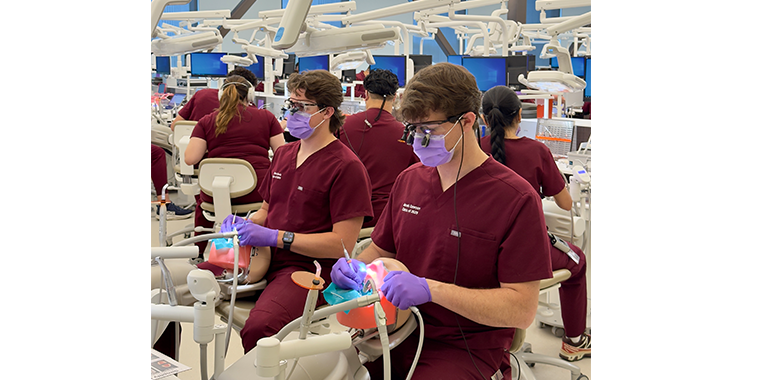
Once your primary application is verified, schools will send secondary applications. These are often school-specific essays or forms detailing your interest in their program. You must submit these promptly, as many schools use a rolling admissions process where spots fill up quickly.
Most programs require letters from science faculty and sometimes a pre-health advisor. Ensure your recommenders have enough time to write detailed, personalized letters. Strong endorsements from professors who know your clinical or research work carry more weight than generic praise.
If selected, you will be invited for an interview, which may be in-person or virtual. Schools like Utah often use Multiple Mini Interviews (MMIs) to assess ethical reasoning and communication skills. Prepare by reviewing current topics in dentistry and practicing behavioral questions.


As an Amazon Associate, we may earn from qualifying purchases.
The entire process typically spans 12 to 18 months. Start preparing your transcripts and taking the DAT at least a year before you intend to enroll. Early preparation allows you to address any academic gaps or weak areas before submitting your application.
Frequently asked questions about dental school
Here are the most common questions prospective students ask about dental school requirements and career paths for the 2026 admission cycle.
No comments yet. Be the first to share your thoughts!