

The AI Revolution Arrives in Dental School
Artificial intelligence is reshaping healthcare, and dentistry is no exception. Traditional dental education, relying on lectures, lab work, and clinical rotations, is evolving. AI integration is changing how dentists train, shifting towards a technology-assisted approach to learning and patient care.
Dental schools are prioritizing new core competencies. Graduates in 2026 and beyond will need skills beyond clinical techniques, including how to use AI tools effectively and ethically. Machine learning, computer vision, and natural language processing (NLP) are central to modernizing dental practice.
Machine learning analyzes patient data to predict treatment outcomes. Computer vision improves diagnostic accuracy with image analysis, and NLP enhances communication and record-keeping. These technologies augment dentists' abilities, leading to faster, more accurate diagnoses and personalized treatment plans. The University of Maryland’s Health Professions Advising Office notes the need for students to show adaptability and technological proficiency.
Simulated Patients & Virtual Reality Training
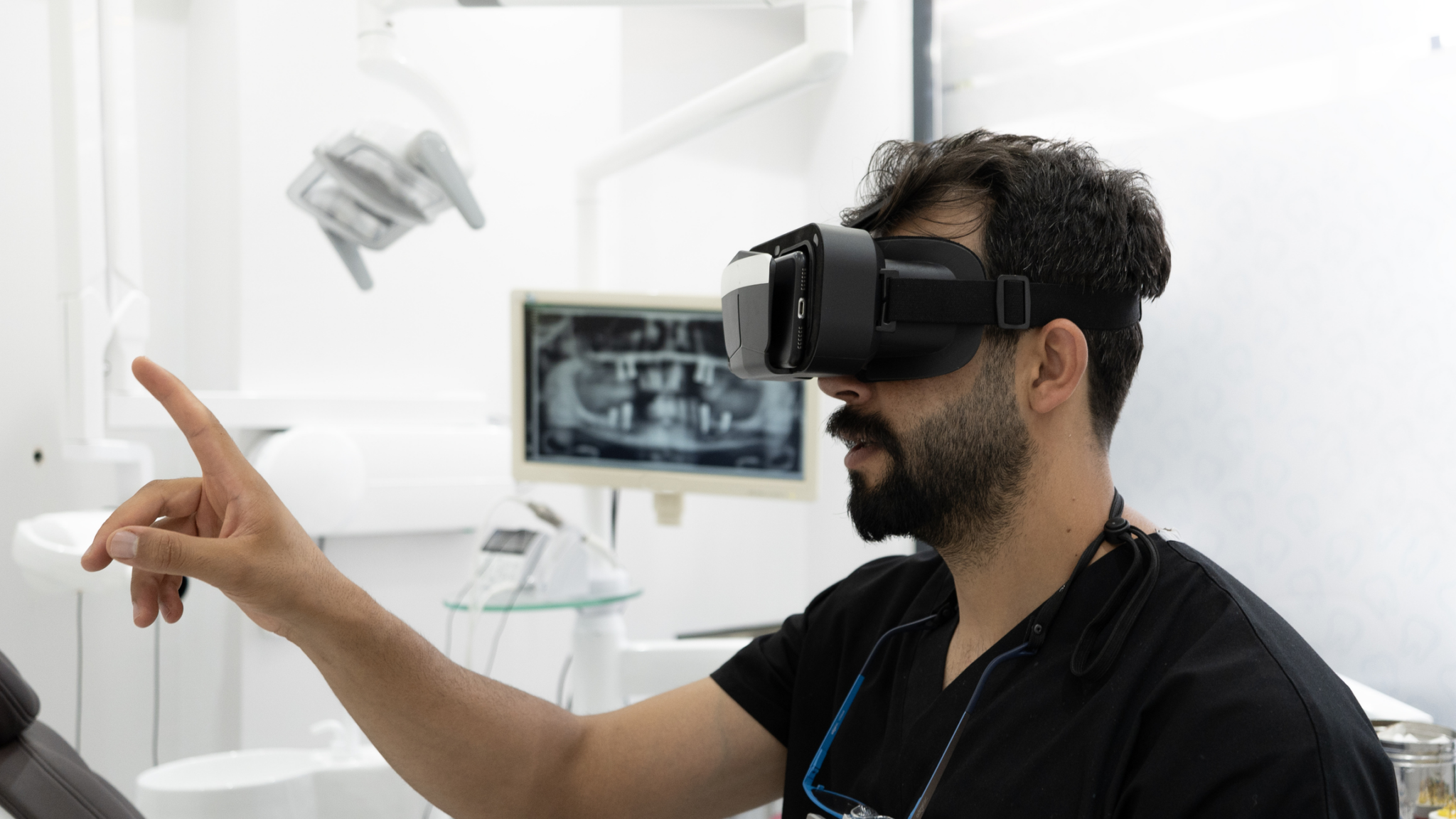
Virtual reality (VR) and AI-powered simulations are changing dental education. Traditional pre-clinical training used dental mannequins, which lack realistic feedback and cannot simulate patient anxiety. VR simulations offer immersive, repeatable scenarios for practicing procedures safely.
Students can practice complex procedures like root canals or crown preparations multiple times, receiving objective performance assessments. This helps them identify areas for improvement without the pressure of real patients, reducing anxiety and building confidence. NEOMED’s admission guidelines highlight VR as a tool for hands-on experience before clinical rotations.
VR dental simulators with haptic feedback enhance realism by simulating the feel of drilling or scaling. Cavity preparation, impression taking, and endodontic procedures are well-suited for this training, offering a significant step beyond static models.
VR is not a perfect substitute for real-world experience, as it cannot fully replicate tactile feedback and unpredictable human variation. A blended model combining VR, traditional lab work, and clinical rotations is most effective.
- Repeatable scenarios for skill mastery
- Reduced patient anxiety during initial procedures
- Objective performance assessments
- Safe environment for practicing complex techniques
AI-Driven Diagnostics: A New Skillset
AI is changing dental diagnostics. Algorithms analyze dental radiographs (X-rays and CBCT scans) to detect caries, assess periodontal disease, and identify subtle signs of oral cancer. This augments dentists' judgment, providing a second opinion and freeing time for treatment planning and patient communication.
Dental students need new competencies: understanding how AI algorithms work, interpreting results, and validating findings. They must critically evaluate AI diagnoses, not just accept them, to avoid errors from biased algorithms or poor data quality. The OSU College of Dentistry’s DDS application process will likely emphasize analytical skills.
Algorithmic bias, from training data, can cause inaccurate diagnoses for certain patient groups. Understanding and mitigating these biases is important. Data privacy is also a concern, as AI systems access sensitive patient information. Dental schools must stress data security and ethics in AI diagnostics.
The Rise of Teledentistry & Remote Monitoring
Teledentistry, using telecommunications for dental care, expands access, particularly for rural or underserved patients. This impacts dental education, requiring students to be proficient in remote consultations, virtual triage, and remote monitoring tools like intraoral cameras. This differs from the traditional in-person care model.
Dental schools are adapting curricula with teledentistry training, including courses on virtual communication, remote diagnosis, and legal/ethical considerations. Students learn to build rapport through screens, assess oral health visually, and provide treatment recommendations.
Teledentistry faces challenges: varying state legal/regulatory frameworks, data security, and patient privacy concerns. Equitable technology access and bridging the digital divide are also important. Students must be aware of and prepared to navigate these issues.
- Conducting remote consultations
- Triaging patients virtually
- Utilizing remote monitoring technologies
- Understanding legal and ethical considerations
Data Science & Predictive Analytics in Dentistry
Data science now extends to patient care and practice management. Predictive analytics identify high-risk patients for caries, periodontal disease, or other oral health problems, allowing dentists to personalize preventative care and intervene early.
Future dentists need increased data literacy, understanding basic statistical concepts and interpreting data-driven insights. Some schools offer biostatistics and data analysis courses, while others integrate data science principles. Extracting meaningful information from electronic health records is becoming a core competency.
Data analytics also optimizes practice management. Dentists can track patient demographics, treatment patterns, and financial performance for informed business decisions.
Ethics & AI: Navigating New Challenges
The integration of AI into dentistry raises a number of ethical concerns. Algorithmic bias, as previously mentioned, is a significant issue. If the data used to train an AI system is biased, the system will perpetuate those biases, potentially leading to disparities in care. Data privacy is another major concern. AI systems require access to sensitive patient information, and protecting that information is paramount.
Patient autonomy is also at stake. Patients have the right to understand how AI is being used in their care and to make informed decisions about their treatment. Job displacement is a potential, though debated, concern. While AI is unlikely to replace dentists entirely, it could automate certain tasks, potentially leading to changes in the dental workforce.
Ethical frameworks are being developed to guide the responsible use of AI in dental practice. These frameworks emphasize the importance of transparency, accountability, and fairness. Dental schools are preparing students to navigate these complex ethical dilemmas by incorporating ethics training into their curricula and encouraging critical thinking about the societal implications of AI.
2026 and Beyond: Projected Curriculum Shifts
By 2026, we can expect to see significant shifts in dental school curricula. New courses or modules focused on AI, data science, and teledentistry will likely become standard. Existing courses will be modified to incorporate AI-related content. For example, diagnostic sciences courses will need to cover AI-driven image analysis, and clinical practice courses will need to address the use of teledentistry.
I anticipate a greater emphasis on interdisciplinary collaboration. Dental students may be required to work with computer science students on AI-related projects, or with data scientists to analyze patient data. This will foster a more holistic understanding of the role of technology in dentistry. The need for continuing education will also become more critical. Practicing dentists will need to continually update their skills and knowledge to keep pace with the rapid advancements in AI.
The focus will shift from simply knowing dental procedures to understanding how to leverage technology to enhance those procedures. This means a greater emphasis on critical thinking, problem-solving, and adaptability. Dental schools will need to prioritize these skills to prepare students for the challenges and opportunities of the future. It's not just about learning the latest technologies; it’s about developing the ability to learn and adapt to new technologies as they emerge.
No comments yet. Be the first to share your thoughts!