

How 2026 admissions are changing
Dental school admissions are shifting for the 2026 cycle. While grades still matter, admissions committees are looking past GPA and DAT scores to find applicants who actually handle stress well and talk to patients like real people. It is a move toward finding capable clinicians rather than just good test-takers.
Two major changes are driving this evolution: the growing prominence of digital portfolios and the evolving role of the MCAT exam. Many institutions are now incorporating digital portfolios as a core part of their application review, providing applicants with a platform to showcase experiences and skills not easily captured in transcripts or test scores. Simultaneously, we’re seeing a recalibration of how the MCAT is weighted, with some schools adopting score-optional policies or emphasizing it less in their holistic review.
Holistic review, of course, isn’t new. But its definition is changing. Schools are moving beyond simply checking boxes for experiences. They want to understand the impact of those experiences, the lessons learned, and how they’ve shaped an applicant's perspective. This demands a more nuanced application process, one that values self-reflection and the ability to articulate personal growth. It's a move toward assessing the whole person, not just the academic achiever.

DAT scores and weighting
The MCAT remains a factor in dental school admissions, but its weight is definitely in flux. While no major schools have entirely eliminated the MCAT, several are experimenting with score-optional policies or clearly stating that it's just one piece of a much larger puzzle. The University of Florida, for example, continues to require the MCAT, but emphasizes a holistic review process that considers all aspects of an applicant’s profile. Colorado School of Dental Medicine also details a holistic review process on their website.
Determining “good” MCAT scores is tricky because of this variability. However, looking at matriculant data provides some guidance. Generally, students admitted to top-tier schools (like UCSF or Harvard) average scores around 515 or higher. Mid-tier schools typically see average scores in the 510-513 range, while scores for successful applicants to more accessible programs can be lower, around 505-510. These are just averages, though; a strong portfolio and compelling experiences can certainly compensate for a slightly lower score.
The DAT isn't going away. It remains the only way for schools to compare students from different grading backgrounds on an even field. But its influence is shrinking. You need to spend more time on your clinical hours and portfolio to balance out a mediocre score.
- Top-tier schools (Harvard, UCSF): 22+ AA
- Mid-Tier Schools: Average MCAT 510-513
- Accessible Programs: Average MCAT 505-510
Dental School MCAT Requirements & Consideration - Entering Class 2026
| School Name | Public/Private | MCAT Policy | Recent Matriculant MCAT Range | MCAT Weighting in Review |
|---|---|---|---|---|
| University of Florida | Public | Required | 513-521 | Considered holistically, significant component |
| University of Michigan | Public | Required | 516-523 | Important factor, but not sole determinant |
| University of California - Los Angeles | Public | Required | 517-525 | Highly weighted, alongside GPA and experience |
| University of Pennsylvania | Private | Required | 519-526 | Substantial component of application |
| Harvard University | Private | Required | 520-528 | Evaluated in context of overall application |
| New York University | Private | Required | 515-522 | Important, but reviewed alongside other factors |
| University of Texas - San Antonio | Public | Optional | 511-518 (for those submitting) | Considered if submitted, not disadvantageous to omit |
| University of Minnesota | Public | Required | 514-520 | Important consideration, part of holistic review |
Illustrative comparison based on the article research brief. Verify current pricing, limits, and product details in the official docs before relying on it.
The Rise of the Digital Portfolio
Digital portfolios are no longer a nice-to-have; they’re rapidly becoming a necessity for dental school applicants. These portfolios provide a platform to showcase experiences and skills that don't easily translate to a transcript or a personal statement. Think of it as a visual and interactive representation of your journey towards dentistry.
A strong digital portfolio should include a variety of elements. Research experience is important, detailing your role, methods, and findings. Document your volunteer work, emphasizing the impact you made and what you learned. Leadership roles demonstrate initiative and responsibility. Don't shy away from showcasing artistic skills – they can highlight your attention to detail and manual dexterity, qualities highly valued in dentistry. Many schools also appreciate seeing evidence of community engagement and cross-cultural experiences.
Currently, there isn't one universally accepted platform for digital portfolios. Many applicants use websites like Behance or create their own using platforms like Wix or Squarespace. Some schools, like the University of Florida, don't specify a platform, leaving it up to the applicant. It’s worth investigating if your target schools have any preferences or requirements. I’ve even heard anecdotal evidence of schools requesting short video components, so consider that as a possibility.
Beyond simply listing your experiences, focus on storytelling. Use the portfolio to demonstrate how these experiences have shaped your understanding of dentistry and your commitment to the profession. Show, don’t just tell. A well-crafted portfolio can be a powerful differentiator, especially for applicants with slightly lower MCAT scores or less traditional backgrounds.
- Research Experience: Detail role, methods, findings.
- Volunteer Work: Emphasize impact and lessons learned.
- Leadership Roles: Demonstrate initiative and responsibility.
- Artistic hobbies: Manual dexterity is vital for lab work and extractions.
Experiences Beyond the Classroom
Dental schools aren't just looking for high grades and test scores; they want to see evidence of qualities like empathy, problem-solving skills, and a genuine commitment to service. Experiences outside the classroom are crucial for demonstrating these attributes, but it's not enough to simply have them – you need to present them effectively.
Shadowing a dentist is still incredibly valuable, but the type of shadowing matters. Spending a week with a specialist in a field that interests you is far more impressive than a superficial experience at a general dentistry practice. Aim for experiences that allow you to observe the dentist-patient relationship, the complexities of diagnosis and treatment, and the ethical considerations of the profession.
Dental-related research is also highly regarded, particularly if you've played an active role in the project. Presenting your research at conferences or publishing your findings demonstrates a commitment to scientific inquiry. But even if your research doesn’t lead to a publication, the skills you’ve developed – critical thinking, data analysis, scientific writing – are valuable assets.
I often see applicants underestimate the importance of articulating the value of their experiences. Don't just say 'I volunteered at a free clinic.' Explain what you did, who you helped, and what you learned about the challenges faced by underserved populations. Show how these experiences have shaped your perspective and solidified your desire to pursue a career in dentistry.
Personal Statements: Adapting to New Standards
The personal statement remains a critical component of the application, but its focus is shifting. With the increased emphasis on digital portfolios and potentially lower MCAT weighting, the personal statement needs to go beyond simply recounting your achievements. It’s your opportunity to provide context, demonstrate self-awareness, and articulate your unique motivations for pursuing dentistry.
Applicants should focus on telling a compelling story that reveals their personality, values, and experiences. What sparked your interest in dentistry? What challenges have you overcome? What are your long-term goals? Be authentic and genuine, and avoid clichés. Show, don’t tell. Instead of saying 'I am a compassionate person,' describe an experience that demonstrates your empathy.
If your application has any perceived weaknesses – a lower MCAT score, a gap in your education – address them directly, but do so strategically. Don’t make excuses. Instead, explain what you learned from the experience and how it has made you a stronger applicant. Frame your narrative in a way that highlights your resilience and your commitment to personal growth.
- Focus on storytelling and authenticity.
- Articulate your motivations for pursuing dentistry.
- Address weaknesses strategically and demonstrate resilience.
What recommenders should mention
Strong letters of recommendation are essential for a successful dental school application. Schools are looking for letters that provide specific examples of your skills, qualities, and potential. Generic letters that simply state 'This student is bright and hardworking' are unlikely to make a significant impression.
Recommenders should highlight qualities like intellectual curiosity, communication skills, teamwork ability, and a commitment to service. Letters from dentists who have directly observed your clinical skills or research abilities are particularly valuable. However, letters from science professors can also be helpful, especially if they can speak to your analytical abilities and problem-solving skills.
Most dental schools require three letters of recommendation. It’s crucial to choose recommenders who know you well and can write a detailed and insightful letter. Give them plenty of time to write the letter, and provide them with your resume, transcript, and personal statement to help them craft a compelling recommendation.
Timeline and Checklist for Applicants
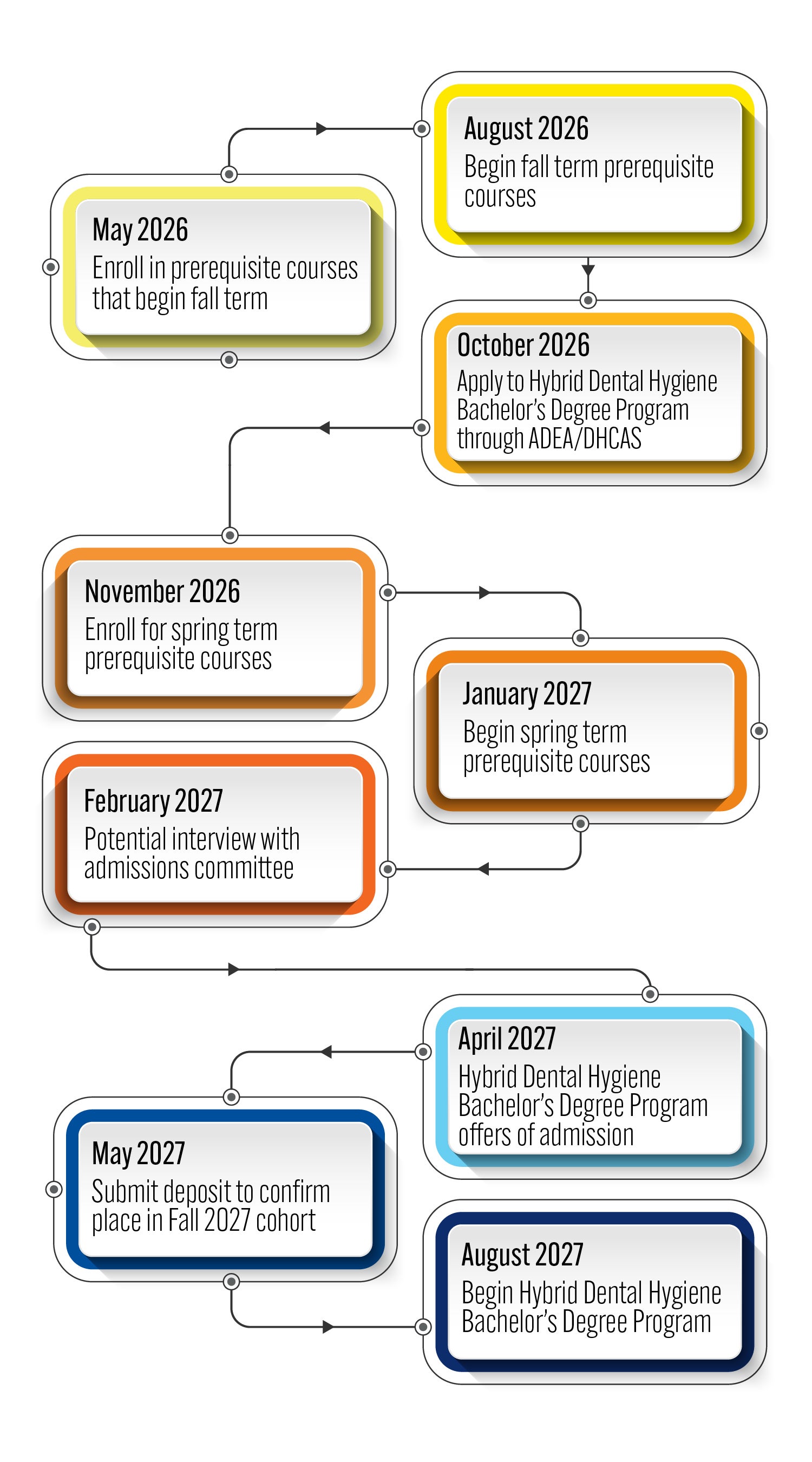
Preparing for dental school admissions requires careful planning and organization. Here's a timeline to help you stay on track for the 2026 cycle. Begin studying for the MCAT at least six months before your planned test date. This allows ample time to cover all the material and practice effectively. Start gathering materials for your digital portfolio early in your junior year, documenting your experiences and collecting supporting evidence.
During the summer before your senior year, finalize your personal statement and request letters of recommendation. Most dental school applications open in May or June, so aim to submit your applications early to maximize your chances of admission. The ADEA AADSAS application typically opens in May. Keep a close eye on the application deadlines for each school you're applying to.
Don’t underestimate the importance of secondary applications. These applications often require additional essays and can significantly impact your chances of admission. Prepare to write multiple essays on a variety of topics. Stay organized and keep track of all your application materials.
- 6+ Months Before MCAT: Begin studying for the MCAT.
- Junior Year: Start gathering portfolio materials.
- Summer Before Senior Year: Finalize personal statement, request letters.
- May/June: Submit primary applications (AADSAS).
- Ongoing: Complete secondary applications.
No comments yet. Be the first to share your thoughts!