

Teledentistry growth in 2026
Teledentistry has moved from a niche offering to a significant component of modern dental practice. The pandemic undeniably accelerated its adoption, as practices sought ways to maintain patient care while minimizing in-person contact. This wasn't just a temporary fix; even as restrictions eased, patients and providers alike recognized the convenience and accessibility of remote oral health care.
We’re seeing sustained growth driven by patient demand for easier access to care, particularly for routine follow-ups and consultations. The U.S. Department of Health and Human Services (HHS) provides valuable resources for practices getting started with telehealth, including information on regulations and best practices – you can find those at telehealth.hhs.gov. It's a good place to start if you’re unfamiliar with the basics.
The conversation has shifted. It’s no longer about if teledentistry will be part of the dental landscape, but how to effectively integrate it into practice management. This involves navigating legal frameworks, choosing the right technology, and ensuring a seamless experience for both patients and the dental team. It requires a thoughtful approach.
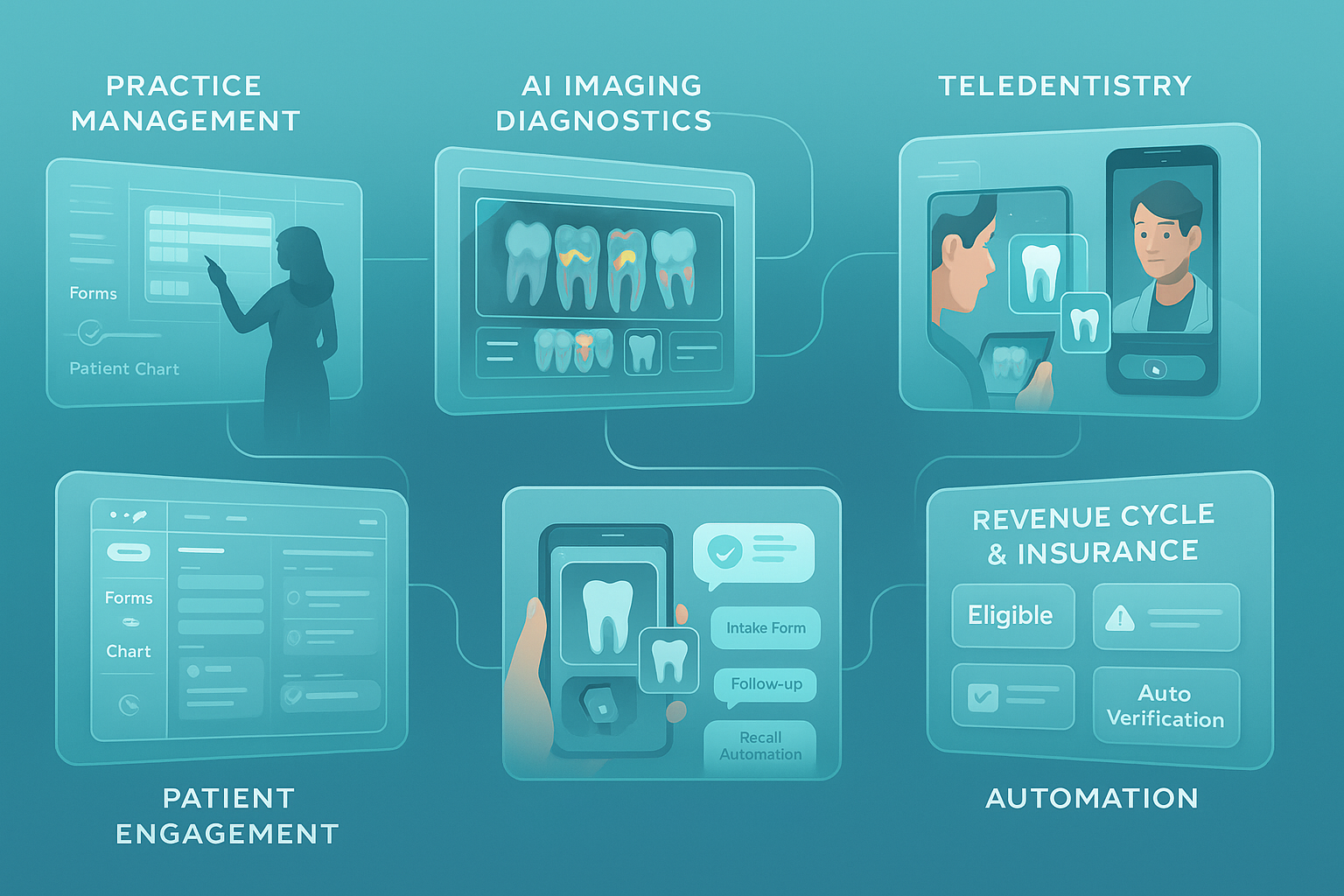
Legal and state regulations
One of the biggest challenges in teledentistry is the patchwork of state regulations. Each state has its own rules regarding what services can be delivered remotely, the required level of dentist-patient relationship, and prescribing limitations. This creates complexity for practices, especially those with patients in multiple states.
The American Dental Association (ADA) has developed a policy on teledentistry that provides guidance for ethical and responsible practice. Their stance emphasizes the importance of maintaining the same standard of care as in-person treatment, which includes appropriate patient evaluation, informed consent, and documentation. The ADA policy serves as a helpful framework, but doesn’t override individual state laws.
Interstate practice is particularly tricky. Generally, dentists can only practice teledentistry in states where they are licensed. There are some exceptions and reciprocity agreements, but these vary widely. It’s essential to verify the specific regulations of each state before providing remote care to a patient located there. Obtaining informed consent is also critical, explicitly outlining the nature of the remote consultation and its limitations.
Staying updated on these evolving regulations is a constant task. Dental practices should regularly monitor changes in state laws and seek legal counsel when needed. Failure to comply can result in penalties, including fines and license suspension.
Technology Choices: Beyond Video Conferencing
While basic video conferencing has been the entry point for many practices, the range of teledentistry technologies now available is much broader. It’s important to understand the different types to choose the best fit for your practice’s needs. There are three main categories: live interactive, store-and-forward, and remote patient monitoring.
Live interactive teledentistry – think real-time video consultations – allows for direct communication between the dentist and patient. This is suitable for assessments, follow-ups, and patient education. Store-and-forward involves collecting patient data (images, x-rays) and securely transmitting it to the dentist for later review. This is useful for specialist consultations or second opinions. Remote patient monitoring uses devices to collect data remotely, like blood pressure or glucose levels, which is less common in standard dentistry but has potential for periodontal maintenance patients.
Intraoral cameras designed for remote use have significantly improved diagnostic quality. These cameras allow dentists to get a detailed view of the patient’s mouth, even from a distance. Key features to look for include high resolution, good lighting, and ease of use. Integration with existing practice management software is also a major plus.
Consider factors like image quality, ease of use for both the dentist and patient, and compatibility with your existing systems. Don't get caught up in chasing the latest gadgets; focus on solutions that address specific clinical needs and improve patient care. A simple, reliable system is often more effective than a complex, feature-rich one.
- Live video for real-time consultations and quick assessments.
- Store-and-Forward: Asynchronous data transfer for specialist reviews.
- Remote Patient Monitoring: Data collection via devices (less common in dentistry).
Teledentistry Method Comparison: A Decision Matrix for Practice Management
| Method | Cost | Complexity | Best Use Cases | Data Security Needs |
|---|---|---|---|---|
| Store-and-Forward | Low to Medium | Low | Post-operative checks, orthodontic progress monitoring, initial screenings, consultations for simple cases | Medium |
| Real-time Interactive | Medium to High | Medium | Emergency triage, comprehensive oral exams (when combined with patient-captured images/video), specialist consultations, treatment planning | High |
| Remote Patient Monitoring | Medium | Medium | Monitoring chronic conditions (e.g., periodontal maintenance), medication adherence, post-surgical recovery, behavioral risk assessment | High |
| Store-and-Forward (Radiographic Review) | Low | Low | Radiographic interpretation by specialists, second opinions on radiographic findings | Medium |
| Real-time Interactive (Mental Health Integration) | Medium | Medium | Teledentistry-supported mental health consultations for dental anxiety or trauma | High |
| Remote Patient Monitoring (Oral Hygiene) | Low to Medium | Low | Tracking brushing/flossing habits via connected devices, providing personalized feedback | Medium |
Illustrative comparison based on the article research brief. Verify current pricing, limits, and product details in the official docs before relying on it.
Reimbursement and Billing Codes
Billing for remote care is often a headache because insurance companies move slower than the technology. You should use D9995 for synchronous (real-time) and D9996 for asynchronous (store-and-forward) reporting. Note that D3320 is actually a root canal code, so using it for a remote exam will result in an immediate denial.
Insurance coverage varies significantly by payer. Some insurers have fully embraced teledentistry and offer comparable reimbursement rates to in-person visits. Others are more hesitant or only cover specific services. It's crucial to verify coverage with each patient’s insurance provider before providing care. You’ll likely need to provide detailed documentation to support your claims.
Claim denials are a common issue. Reasons can include insufficient documentation, incorrect coding, or the service not being covered under the patient’s plan. Be prepared to appeal denied claims, providing additional information and justification for the service provided. Keep meticulous records of all interactions with insurance companies.
Parity laws, which require insurers to reimburse teledentistry services at the same rate as in-person services, are gaining traction in some states. However, these laws are not universal, so it’s important to be aware of the regulations in your jurisdiction. This is an area of ongoing change, so staying informed is essential.
Patient Selection and Suitability
Teledentistry isn’t appropriate for every patient or every situation. Careful patient selection is critical to ensure safe and effective care. Consider factors like the patient’s condition, their access to technology, their comfort level with remote care, and their medical history.
Patients with stable conditions requiring routine follow-up care are generally good candidates. Those needing comprehensive exams, complex procedures, or acute care always require in-person evaluation. Patients who are technologically challenged or lack reliable internet access may not be suitable for teledentistry.
Address patient concerns about the quality of remote care proactively. Explain the benefits and limitations of teledentistry, and emphasize that it’s not a replacement for in-person care, but rather a complementary service. Acknowledge that some conditions require hands-on examination and treatment.
A checklist can be helpful in determining patient suitability. Include questions about their technology access, medical history, and understanding of the process. It’s also important to obtain informed consent, clearly outlining the scope of the remote consultation and its potential limitations.
- Assess patient's technology access and comfort.
- Review medical history for contraindications.
- Determine if the condition is suitable for remote evaluation.
- Obtain informed consent.
Workflow Integration: Fitting Teledentistry In
Successfully integrating teledentistry into your practice requires careful planning and workflow adjustments. Consider how it will impact scheduling, patient intake, documentation, and follow-up care. Don’t treat it as an add-on; it should be seamlessly integrated into your existing processes.
Dedicated staff training is essential. Ensure your team understands how to use the technology, conduct remote consultations, and maintain patient confidentiality. Develop clear protocols for scheduling teledentistry appointments, verifying patient eligibility, and collecting necessary information.
Integrating teledentistry with your existing practice management software can streamline the process. Look for systems that offer features like secure video conferencing, appointment scheduling, and electronic health record (EHR) integration. This minimizes manual data entry and reduces the risk of errors.
Maintaining efficiency is key. Optimize your workflow to avoid delays and disruptions. Consider using a dedicated teledentistry room or space to ensure privacy and a professional environment. Regularly evaluate your processes and make adjustments as needed.
Data Security and HIPAA Compliance
Protecting patient data is paramount in teledentistry. The Health Insurance Portability and Accountability Act (HIPAA) sets strict standards for the privacy and security of protected health information (PHI). You must ensure that your teledentistry platform and practices comply with these regulations.
Use secure video conferencing platforms that are specifically designed for healthcare and offer features like end-to-end encryption. Implement robust data encryption protocols to protect patient data during transmission and storage. Develop a comprehensive breach notification protocol to address potential security incidents.
Avoid using non-HIPAA-compliant tools like generic video conferencing apps for patient consultations. These tools may not provide the necessary security safeguards. Always enter into Business Associate Agreements (BAAs) with technology vendors who have access to PHI. This outlines their responsibilities for protecting patient data.
Regularly assess your security measures and update them as needed. Conduct staff training on HIPAA compliance and data security best practices. A proactive approach to data security is essential to protect your patients and your practice.
- Use HIPAA-compliant video conferencing.
- Implement data encryption.
- Establish a breach notification protocol.
- Execute Business Associate Agreements (BAAs).

No comments yet. Be the first to share your thoughts!