

Get dental school requirements right
Before you apply, you need to map out the academic and experiential prerequisites. Most DDS and DMD programs require a bachelor’s degree, but they rarely mandate a specific major. Instead, they look for completion of core science courses with a minimum GPA, typically a 3.0 or higher.
You must complete specific foundational classes. These usually include general biology, general chemistry, organic chemistry, and physics, all with labs. Most schools also require biochemistry, genetics, microbiology, and human anatomy or physiology. Psychology and sociology are increasingly common requirements, reflecting the biopsychosocial model of modern dental care.
Beyond coursework, you need clinical experience. Shadowing dentists for at least 40–100 hours is standard. Many programs also require volunteer work in community settings. These experiences prove you understand the daily reality of the profession before committing to four years of intense study.
Checklist: Pre-Dental Prerequisites
-
Bachelor’s degree from an accredited institution
-
90–120 semester hours completed
-
General Biology with lab
-
General Chemistry with lab
-
Organic Chemistry with lab
-
Biochemistry
-
Physics with lab
-
Genetics
-
Microbiology
-
Human Anatomy and Physiology
-
Psychology and Sociology
-
40–100 hours of dental shadowing
-
Community service or volunteer hours
Work through the steps
The Dentist’s Roadmap works best as a clear sequence: define the constraint, compare the realistic options, test the tradeoff, and choose the path with the fewest hidden costs. That order keeps the advice usable instead of decorative. After each step, pause long enough to check whether the recommendation still fits the reader's actual situation. If it depends on perfect timing, unusual access, or a best-case budget, include a simpler fallback.
Common Mistakes That Derail Dental School Applications
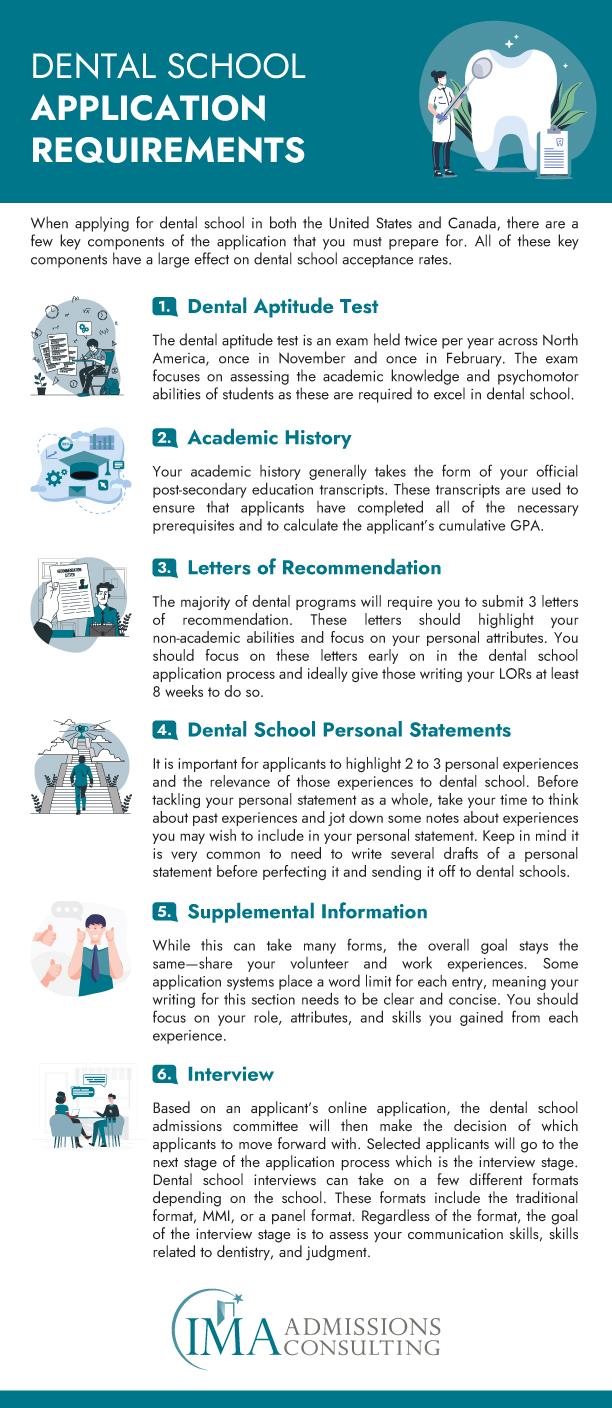
Even with a high GPA and strong DAT scores, applicants often stumble on logistical and strategic errors. These missteps can disqualify candidates before their file is fully reviewed. Avoiding these pitfalls requires treating the application process as a precise clinical procedure rather than a general college application.
Ignoring Specific Prerequisite Variations
Dental schools do not follow a single, unified curriculum for pre-dental requirements. While general biology and chemistry are standard, specific requirements vary significantly by institution. For example, Texas A&M College of Dentistry requires a minimum of ninety semester hours with a "C" or better in all required courses, while other schools may demand specific hours in humanities, ethics, or public health. Assuming a one-size-fits-all prerequisite list is a critical error. You must verify the exact course codes and credit hours for each school on your list, as missing a single required lab or elective can result in an automatic rejection.
Underestimating the Value of Shadowing
Many applicants treat shadowing as a checkbox exercise, logging hours without meaningful engagement. Admissions committees look for evidence that you understand the daily reality of dental practice, not just the prestige. Shadowing in diverse settings—general practice, orthodontics, and public health clinics—demonstrates a well-rounded perspective. Simply counting hours without reflecting on the clinical workflow or patient interactions weakens your narrative. Quality of observation matters more than quantity; you need to show you have seen the profession’s challenges firsthand.
Neglecting the Personal Statement’s Narrative
A common mistake is submitting a generic personal statement that lists achievements rather than telling a story. Your essay should explain why you want to be a dentist, not just why you are qualified. Admissions committees read thousands of applications; a unique narrative about your motivation, resilience, or specific interest in oral health stands out. Avoid clichés about "helping people" and instead focus on specific experiences that shaped your decision. A compelling story connects your academic achievements to your future professional identity, making your application memorable.
Failing to Prepare for the Interview
The interview is the final hurdle, yet many applicants underestimate its importance. Behavioral questions are common, and you must be ready to articulate your teamwork, leadership, and ethical reasoning. Mock interviews with mentors or peers can reveal gaps in your communication skills. Failing to prepare specific examples of how you handled conflict or solved problems can make you appear unprepared for the collaborative nature of dental practice. Treat the interview as a professional consultation, not a casual chat.
No comments yet. Be the first to share your thoughts!