

The environmental cost of dentistry
Dentistry creates a lot of waste. Patients are noticing, and many now choose clinics based on their environmental impact. Moving away from single-use plastics isn't just a trend; it is a basic professional responsibility we can no longer ignore.
The dental industry's impact stems from several areas. Waste generation is a big one, with everything from single-use plastics to sharps and amalgam contributing to landfill burden. Water usage is substantial, supporting sterilization, rinsing, and other essential procedures. Energy consumption from equipment and building operations adds to the carbon footprint. The PMC article "Integrating sustainability in dentistry" highlights this interconnectedness and the need for holistic solutions.
The United Nations 2030 Agenda for Sustainable Development provides a useful framework for understanding this shift. Goals related to responsible consumption and production (Goal 12), climate action (Goal 13), and clean water and sanitation (Goal 6) are particularly relevant to dentistry. It's a broad vision, but it emphasizes that environmental sustainability is not separate from economic and social progress. We, as a profession, have a role to play in achieving these global objectives.
Regulations are tightening, and the cost of waste disposal is climbing. Transitioning to greener methods is now a financial necessity as much as an ethical one.
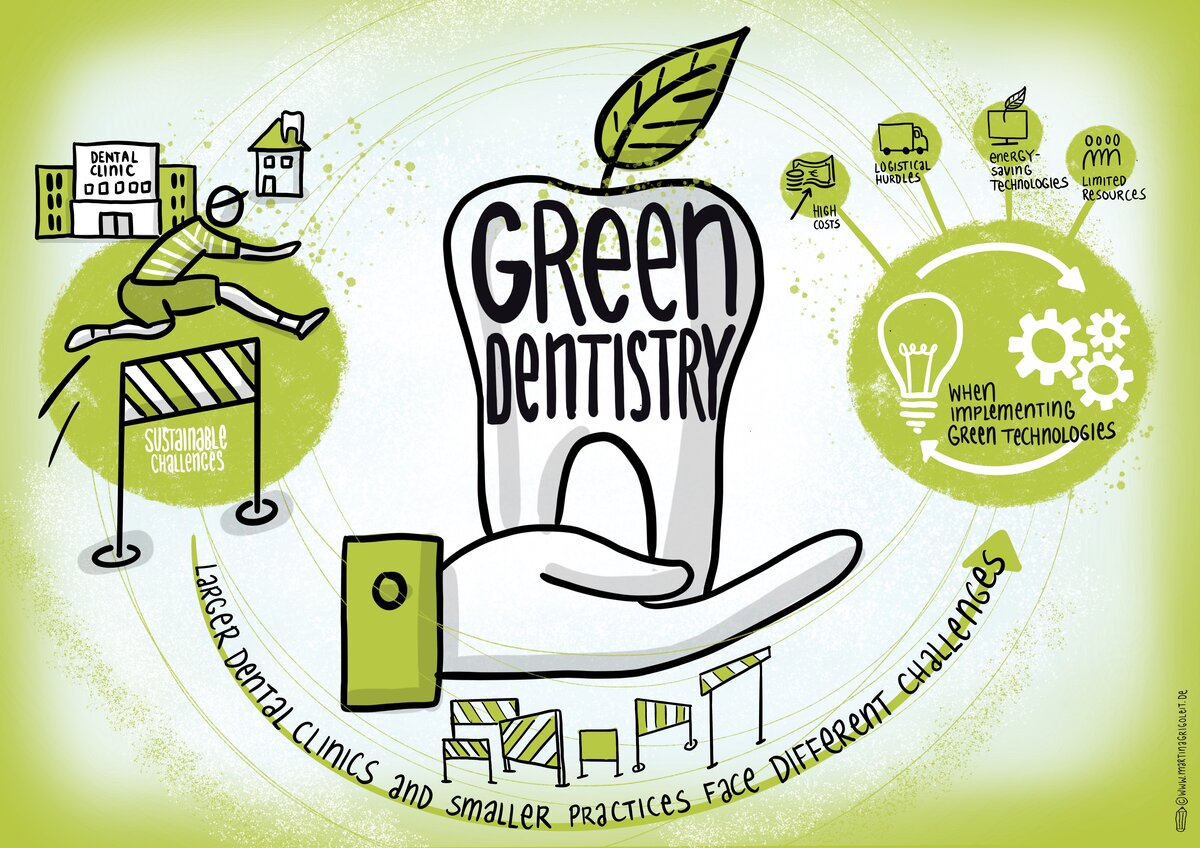
Choosing materials that reduce waste
The materials we choose have a massive impact on a practice’s overall sustainability. Amalgam, historically a standard filling material, raises environmental concerns due to its mercury content. While amalgam separators are now standard in many practices, the initial production and ultimate disposal of mercury-containing waste remain problematic. Composites, while generally considered more environmentally friendly, aren’t without their issues – the production of resins and the potential for microplastic release are areas of concern.
Impression materials present another challenge. Traditional polyvinyl siloxane (PVS) impressions generate significant plastic waste. Digital impressions are gaining traction as a more sustainable alternative, eliminating the need for physical materials. However, the environmental cost of the scanning equipment and its eventual disposal needs to be considered. A full lifecycle assessment – evaluating the environmental impact of a material from cradle to grave – is essential for making informed choices.
Biodegradable materials are emerging as a promising option, but their performance and durability often lag behind traditional materials. The ADA’s Clinical Practice Guidelines emphasize evidence-based dentistry. It’s a delicate balance between adopting innovative materials and ensuring high-quality patient care. Cost is also a factor; sustainable alternatives can sometimes be more expensive upfront.
Navigating this complex landscape requires careful consideration. Practices should evaluate the environmental impact of all materials, prioritize those with lower footprints, and explore opportunities to reduce waste through efficient inventory management and proper disposal procedures. Switching to unit-dose materials, where appropriate, can minimize waste and ensure accurate mixing ratios.
- Amalgam contains mercury and requires specialized disposal to prevent water contamination.
- Composites: Resin-based, potential for microplastic release.
- PVS Impressions: Generate significant plastic waste.
- Digital Impressions: Reduce material waste, but have equipment costs.
Comparison of Common Dental Materials: Environmental & Practical Considerations
| Dental Material | Environmental Impact | Cost | Durability | Patient Safety |
|---|---|---|---|---|
| Amalgam | Higher - Contains mercury, potential for environmental contamination during disposal. | Lower | High | Generally safe, but mercury concerns exist. |
| Composite Resin | Medium - Production relies on petroleum-based products; disposal can be challenging. | Medium | Medium | High - Biocompatible, but potential for allergic reactions in some patients. |
| Glass Ionomer | Medium - Contains fluoride, offering some remineralization benefits; production energy use is a factor. | Medium | Lower | High - Good biocompatibility, releases fluoride. |
| Digital Impression (vs. Traditional) | Better for - Significantly reduces material waste associated with impression taking. | Higher initial investment, potentially lower long-term costs | Not applicable - relates to process, not material durability | High - Eliminates potential for impression material allergies. |
| Ceramic (e.g., Porcelain) | Medium - Requires high-temperature firing, energy intensive; sourcing of raw materials impacts sustainability. | Higher | High | High - Excellent biocompatibility and aesthetics. |
| Resin-Modified Glass Ionomer | Medium - Combines benefits and drawbacks of resin and glass ionomer. | Medium | Medium | High - Good biocompatibility, fluoride release, and adhesion. |
Qualitative comparison based on the article research brief. Confirm current product details in the official docs before making implementation choices.
Water Conservation: Beyond the Rinse
Dental procedures are notoriously water-intensive. From rinsing during procedures to sterilizing instruments, water is a critical resource. But it's also a resource we need to conserve. Beyond the ethical considerations, reducing water usage can significantly lower operating costs, particularly wastewater treatment fees. It's a win-win situation.
A significant amount of water is used for evacuation during procedures. Implementing low-flow devices for handpieces and ultrasonic scalers can dramatically reduce water consumption without compromising patient care. Dry vacuum systems, which use significantly less water than traditional methods, are another effective solution. These systems typically involve a high-volume evacuation system combined with anti-retraction valves.
Efficient sterilization techniques are also crucial. Ensuring autoclaves are properly maintained and operated according to manufacturer guidelines minimizes water and energy waste. Consider using closed-loop sterilization systems that recycle water. Regularly checking for and repairing leaks in pipes and fixtures can prevent significant water loss.
Simple behavioral changes can make a difference, too. Encouraging staff to turn off water when not actively using it, and educating patients about water conservation efforts, can foster a culture of sustainability within the practice. Water conservation isn’t just about technology; it’s about mindful practices.
- Install low-flow devices on handpieces and scalers to cut water waste without losing pressure.
- Implement dry vacuum systems.
- Maintain autoclaves for efficient sterilization.
- Repair leaks promptly.
Energy Efficiency: Powering a Greener Practice
Dental offices are energy-intensive environments. Lights, sterilization equipment, HVAC systems – all consume significant amounts of electricity. Reducing energy consumption isn’t just good for the environment; it’s good for the bottom line. Energy costs can represent a substantial portion of a practice’s operating expenses.
Switching to LED lighting is one of the simplest and most effective ways to reduce energy consumption. LEDs use significantly less energy than traditional incandescent or fluorescent bulbs and have a much longer lifespan. Upgrading to energy-efficient sterilization equipment can also yield substantial savings. Look for models with Energy Star certification.
Optimizing HVAC systems is critical. Regularly maintaining filters, ensuring proper insulation, and using programmable thermostats can minimize energy waste. Consider using zoning to heat or cool only occupied areas of the office. Smart thermostats can learn your usage patterns and automatically adjust temperatures to maximize efficiency.
Exploring renewable energy options, such as solar power, is a longer-term investment that can significantly reduce a practice’s carbon footprint. While the initial cost can be substantial, government incentives and long-term energy savings can make it a viable option. A thorough energy audit can help identify areas for improvement and estimate potential cost savings.
- Switch to LED lighting.
- Upgrade to energy-efficient sterilization equipment.
- Optimize HVAC systems.
- Consider renewable energy options like solar power.
Waste Management: From Amalgam to PPE
Dental practices generate a diverse range of waste – sharps, contaminated materials, packaging, and more. Proper waste segregation and disposal are essential for protecting public health and the environment. But simply complying with regulations isn’t enough; we need to actively reduce waste at the source.
Amalgam waste requires specialized handling due to its mercury content. Amalgam separators are now required in many jurisdictions and effectively capture mercury from wastewater. Sharps containers must be used for all needles, blades, and other sharp objects. Contaminated materials, such as gauze and gloves, should be disposed of in biohazard containers.
The recent pandemic has significantly increased the amount of personal protective equipment (PPE) waste generated by dental practices. Exploring PPE recycling programs is crucial. Some companies specialize in recycling gloves, masks, and gowns, diverting them from landfills. Reducing PPE usage where appropriate, while maintaining infection control standards, is also important.
Recycling dental waste can be challenging due to contamination concerns. However, some materials, such as cardboard and paper, can be recycled through standard municipal programs. Implementing a comprehensive waste management plan, including employee training and regular audits, is essential for minimizing environmental impact.
- Use amalgam separators.
- Properly dispose of sharps in designated containers.
- Utilize biohazard containers for contaminated materials.
- Explore PPE recycling programs.
The reality of digital dentistry
Digital dentistry – encompassing CAD/CAM systems, digital impressions, and 3D printing – is often presented as a more sustainable alternative to traditional methods. And in many ways, it is. Digital workflows can reduce material waste, eliminate the need for physical models, and improve efficiency. However, it’s not a simple equation.
The energy consumption of digital equipment is a significant concern. CAD/CAM mills, 3D printers, and scanning devices all require electricity to operate. The manufacturing of these devices also has an environmental footprint. Furthermore, the materials used for 3D printing, such as resins, can have their own environmental impacts.
E-waste is another issue. Digital equipment becomes obsolete relatively quickly, leading to a growing stream of electronic waste. Proper disposal of e-waste is crucial to prevent harmful substances from entering the environment. Practices should consider partnering with certified e-waste recyclers.
Ultimately, the sustainability of digital dentistry depends on how it’s implemented. Choosing energy-efficient equipment, minimizing material waste, and properly disposing of e-waste are all essential. It’s about adopting a holistic approach that considers the entire lifecycle of the technology.
How has the adoption of digital dentistry impacted the sustainability of your practice?
Vote below to share whether digital workflows have improved, had no effect on, or worsened the sustainability of your dental practice.

No comments yet. Be the first to share your thoughts!