

The reality of dental school
Dental school is a massive commitment. You're looking at a decade of school and a debt load that often hits six figures before you even see your first patient. It's a grind that requires more than just good grades; you need the stomach for long clinical hours and the patience for high-stakes testing.
You’ll face rigorous coursework, demanding clinical rotations, and the pressure of high-stakes exams. The financial burden is considerable, with tuition costs often exceeding $300,000 for a four-year program. But despite these challenges, the rewards can be immense: a fulfilling career, financial stability, and the opportunity to improve people’s lives.
Getting in requires a specific mix of science credits, a solid DAT score, and enough shadowing hours to prove you know what the job actually looks like. Here is the breakdown of the 2026-2027 requirements.
Core science requirements
Most dental schools have fairly standardized science prerequisites. Expect to need at least 8 semester hours of general chemistry with a lab component – that’s a non-negotiable for nearly every program. Organic chemistry is almost universally required, usually another 8 semester hours with lab. Biochemistry is becoming increasingly common, and many schools now list it as a requirement.
Physics is another must-have, typically 8 semester hours with lab. Biology is also standard, often requiring 8 semester hours, sometimes broken down into general biology and upper-level courses. I've noticed a growing number of schools suggesting or requiring coursework in microbiology as well.
Requirements can vary, so always check the specific prerequisites for each school you’re applying to. The University of Maryland, for example, specifically lists requirements on their website (dental.umaryland.edu). AP or IB credit is generally accepted, but be aware that some schools may require you to retake the course in college if your score wasn’t high enough, or if they want to see your performance in a college-level setting.
Don't assume a good grade in AP Chemistry is enough. Many schools want to see you succeed in a full semester of college-level coursework. It’s a subtle but important distinction. You might also encounter schools like Augusta University (augusta.edu) that provide a concise admission requirements summary – always a good place to start.
- General chemistry: 8 hours with lab
- 8 Semester Hours: Organic Chemistry with Lab
- 8 Semester Hours: Physics with Lab
- 8 Semester Hours: Biology (often split into General Biology + Upper Level)
- Biochemistry (increasingly required)
- Microbiology (growing in popularity)
Common Dental School Prerequisite Courses (2026-2027 Entry)
| Course | Credit Hours Typically Required | Lab Component | Admission Consideration |
|---|---|---|---|
| General Chemistry I & II | 8 (4 per course) | Typically Required | Almost Universally Required |
| Organic Chemistry I & II | 8 (4 per course) | Typically Required | Almost Universally Required |
| Biology I & II | 8 (4 per course) | Typically Required | Almost Universally Required |
| Physics I & II | 8 (4 per course) | Typically Required | Frequently Required |
| Biochemistry | 3-4 | Often Recommended | Increasingly Important |
| English Composition | 6 | Not Applicable | Typically Required |
| Mathematics (Calculus/Statistics) | Varies | Not Applicable | Often Recommended |
| Microbiology | 3-4 | Often Recommended | Beneficial for Competitive Applicants |
Illustrative comparison based on the article research brief. Verify current pricing, limits, and product details in the official docs before relying on it.
English and social science credits
Dental school isn’t solely about science. Admissions committees are looking for well-rounded individuals with strong communication skills, critical thinking abilities, and a broad understanding of the world. This is where the "soft" prerequisites come into play.
Most schools require at least 6 semester hours of English, focusing on composition and literature. Social sciences, like psychology and sociology, are also commonly required, demonstrating your understanding of human behavior – which is hugely important when dealing with patients. Humanities courses, like history or philosophy, show your ability to think critically and analyze complex ideas.
You can't just hide in a lab. Dentists spend all day explaining complex procedures to nervous patients and managing a staff. This is why schools look for writing and public speaking credits. I've also seen more programs add biostatistics to the list as they move toward evidence-based practice.
Penn Dental Medicine (dental.upenn.edu) is a good example of a school with comprehensive requirements. They, like many others, emphasize the need for a broad education. Don't underestimate these courses; they can be the difference between acceptance and rejection.
Beating the DAT
The DAT is the biggest hurdle in the application. It’s a computer-based marathon covering science, perceptual ability, reading, and math. You can't wing this one; most successful applicants spend months on practice tests.
The Survey of the Natural Sciences section tests your knowledge of general chemistry, organic chemistry, biology, and physics. The Perceptual Ability Test (PAT) assesses your spatial reasoning and ability to visualize objects. Reading Comprehension evaluates your ability to understand and analyze written material. Finally, Quantitative Reasoning tests your mathematical skills.
Realistic score ranges vary depending on the school. Highly competitive schools generally look for DAT scores above 20, with scores of 22 or higher being particularly impressive. A score between 18 and 20 is generally considered competitive for many schools, while scores below 18 may require a stronger application in other areas. Remember, the DAT is scored out of 30.
Preparation resources abound. Kaplan and The Princeton Review offer comprehensive DAT prep courses, but they can be expensive. DAT Bootcamp is a popular and more affordable option, known for its realistic practice tests. The ADA also provides official DAT resources (ada.org). I've found that a combination of resources, tailored to your weaknesses, is often the most effective strategy.
Dental School Prep: A Basic Science Knowledge Check
So, you're gearing up for the DAT and dental school applications? A strong foundation in the basic sciences is crucial. This quick quiz will test your knowledge in areas heavily emphasized on the DAT and in your prerequisite coursework. Good luck!
Experiences Matter: Volunteering, Shadowing, and Research
Dental schools want to see that you're genuinely interested in the profession and have a realistic understanding of what it entails. This is where extracurricular activities come into play. Dental-related experiences, such as shadowing dentists and volunteering in dental clinics, are particularly valuable.
Shadowing allows you to observe dentists in their practice, gaining insight into the day-to-day realities of the profession. Volunteering in a dental clinic demonstrates your commitment to service and your willingness to work with patients. While there's no magic number of hours, competitive applicants typically have at least 100-200 hours of shadowing and volunteering experience.
Research experience is also highly valued, particularly at research-focused dental schools. It demonstrates your ability to think critically, analyze data, and contribute to the advancement of knowledge. The quality of your research matters more than the quantity of hours. A meaningful research project, even if it’s relatively short-term, can be more impressive than a long list of superficial experiences.
Leadership roles in extracurricular activities can further strengthen your application. Holding a leadership position demonstrates your initiative, responsibility, and ability to work effectively with others. It shows you’re not just a participant, but a contributor.
The Application Process: From AMCAS to AACOMAS… to AADSAS
The application process for dental school is centralized through the Associated American Dental Schools Application Service (AADSAS). This online platform allows you to submit your transcripts, DAT scores, and personal statement to multiple dental schools simultaneously. It’s a streamlined process, but it requires careful attention to detail.
The AADSAS application consists of several sections. You’ll need to submit official transcripts from all colleges and universities you’ve attended. Your DAT scores will be automatically transmitted to AADSAS. The personal statement is your opportunity to showcase your personality, motivations, and experiences. Letters of recommendation are also crucial.
Your personal statement should be well-written, thoughtful, and authentic. It should tell a compelling story that highlights your passion for dentistry and your unique qualifications. Aim for a statement that is approximately 500-750 words. Secure letters of recommendation from science professors who know you well and dentists you’ve shadowed.
After submitting your AADSAS application, you’ll likely receive secondary applications from individual schools. These applications typically include additional essays and questions that are specific to each school. Tailor your responses to each school, demonstrating your knowledge of their program and your genuine interest in attending.
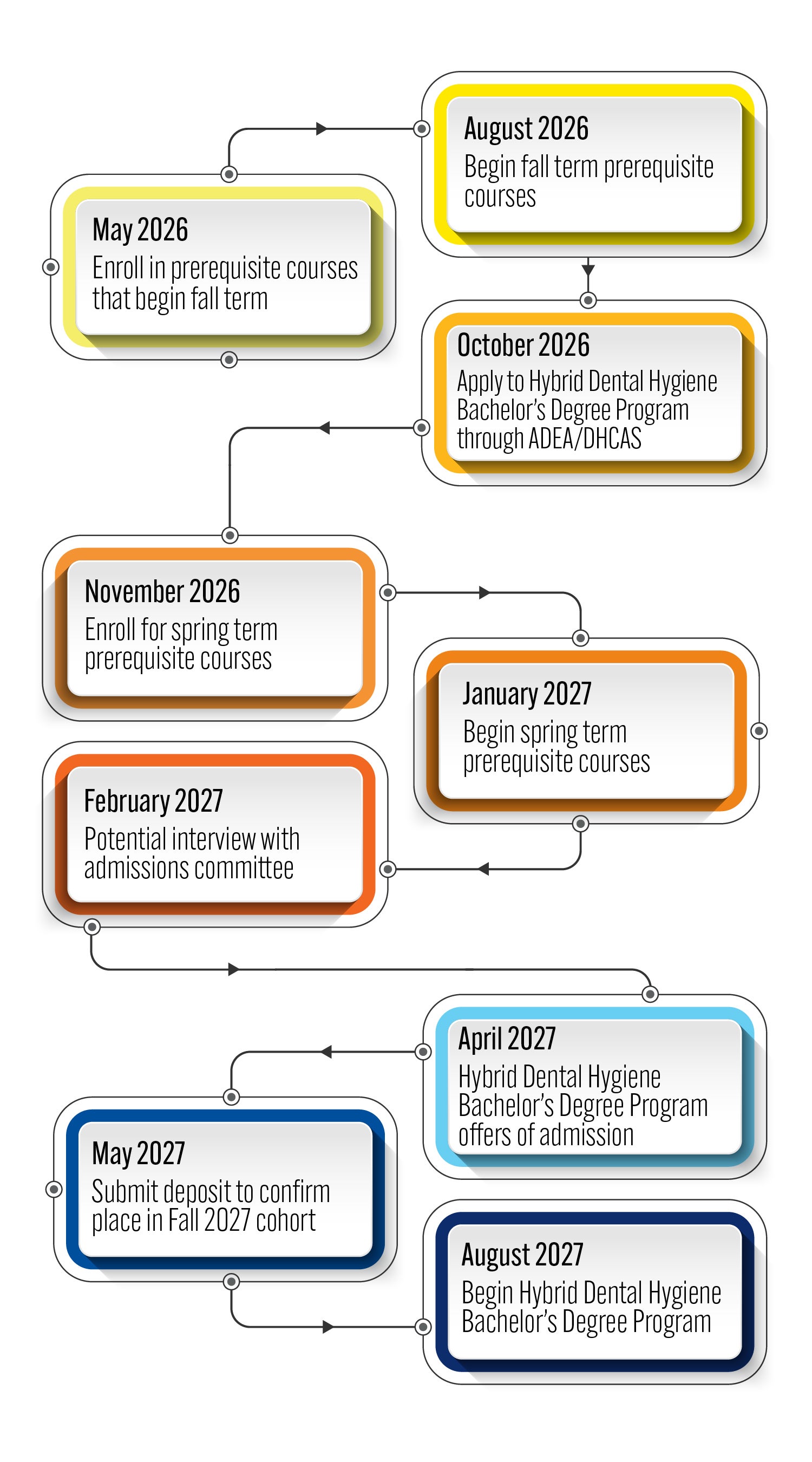
Timing is Everything: A Dental School Application Timeline
A successful dental school application requires careful planning and organization. Start preparing for the DAT at least six months to a year before your application cycle. This allows you ample time to study and achieve a competitive score. Begin requesting transcripts and letters of recommendation well in advance of the application deadline.
The AADSAS application typically opens in May, and the deadline for submission is usually in February of the following year. However, applying early is highly recommended. Schools review applications on a rolling basis, so the earlier you apply, the better your chances of getting an interview.
Secondary applications are sent out throughout the fall and winter. Respond to these applications promptly and thoughtfully. Interview invitations are typically extended between November and March. Be prepared to interview at multiple schools.
Here’s a rough timeline: Junior year – focus on coursework and start DAT prep. Summer before senior year – take the DAT. Senior year – submit AADSAS application in June/July, complete secondary applications, and attend interviews.
No comments yet. Be the first to share your thoughts!