

Virtual Reality’s Arrival in Dental Schools
Dental education has always evolved. Twenty years ago, digital radiography was new, and CAD/CAM technology was mostly in labs. Now, artificial intelligence and virtual reality are driving a dramatic shift. This change in dentist training will be fully apparent by 2026.
Historically, dental schools have relied heavily on traditional methods: lectures, textbooks, and hands-on practice with mannequins and, eventually, patients. These methods are valuable, but they have limitations. Access to a diverse range of patient cases can be a challenge, and the pressure to learn on real patients can be immense. Simulation-based learning has been growing in popularity as a way to address these issues, but early simulations often lacked the realism needed for effective skill transfer.
VR offers a solution. Immersive environments let students practice complex procedures repeatedly, without patient risk. AI adds personalized feedback and adapts simulations to skill levels. This augments traditional methods, creating a more effective learning experience to equip dentists with skills and confidence for high-quality care.
The pace of change feels different. This integration of AI and VR isn't just improving simulation; it's reshaping dental education.
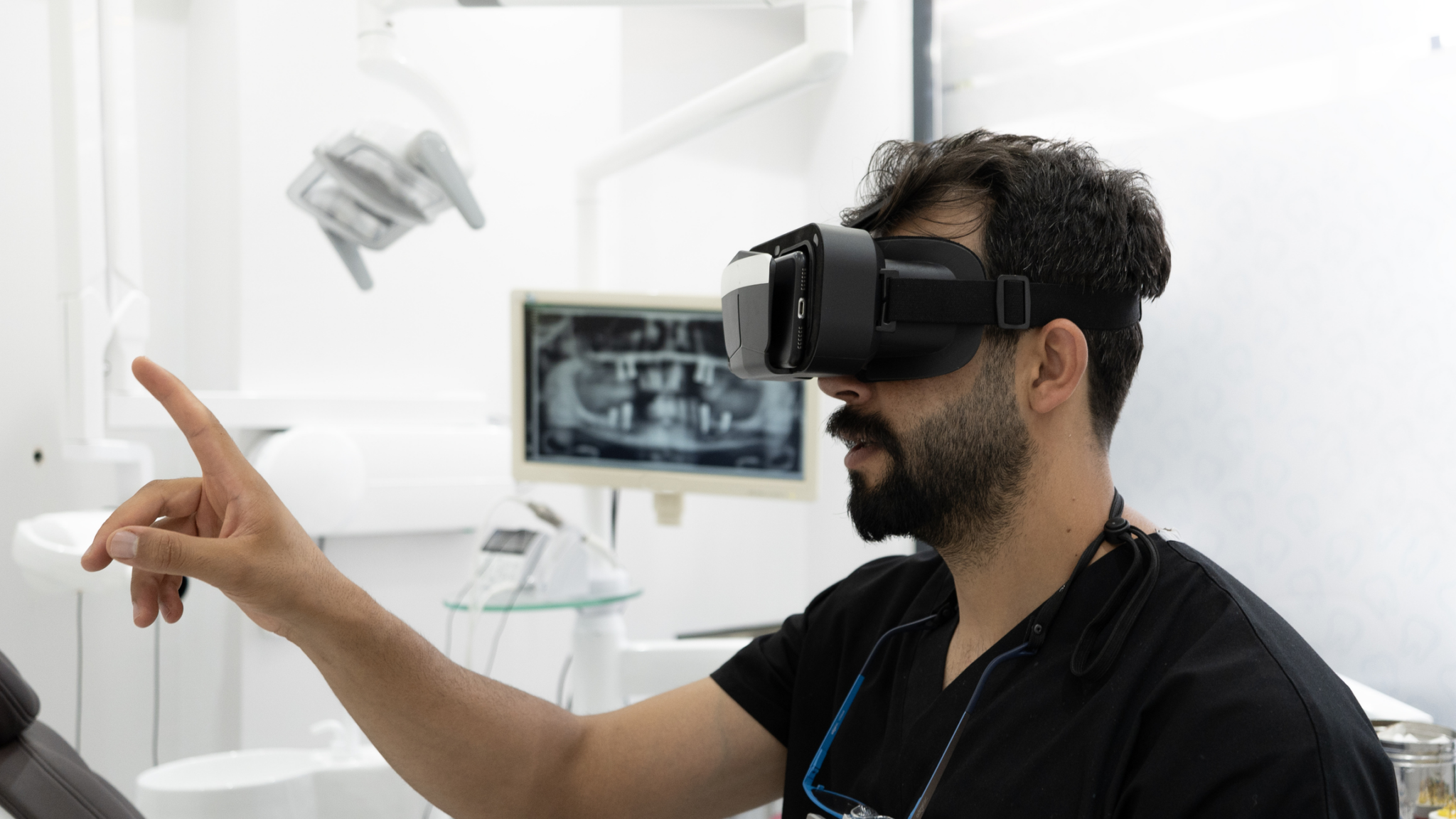
NEOMED and OSU: Early Adopters
Several dental schools are integrating VR and AI into their curricula. Northeast Ohio Medical University (NEOMED) and The Ohio State University College of Dentistry are examples. NEOMED uses VR modules for endodontic procedures, letting students practice access cavity preparations, canal negotiations, and obturation techniques risk-free. Their goal is to improve student preparedness and reduce patient treatment times.
At Ohio State, VR simulations are being developed for procedures like restorative dentistry and oral surgery using the SimView platform. Students practice on virtual patients with varying anatomy and scenarios. A benefit is exposing students to a wider range of cases than typical in clinical settings, valuable for rare conditions or complex procedures.
These programs address real gaps in traditional training. Limited access to diverse patient populations, especially for students in certain locations, can be bridged by VR simulations. All students gain practice on various cases. Repeating procedures with immediate feedback is also a significant advantage.
Both institutions integrate VR and AI into the existing curriculum, not as add-ons. VR simulations reinforce lecture and lab concepts, preparing students for clinical experiences. This blended approach uses strengths of traditional and new technologies.
The Shifting Curriculum: Skills in Demand
As AI and VR become more prevalent in dental practice, dentist skills are evolving. Mastering technical aspects is no longer enough. Dentists need critical thinking, creative problem-solving, and quick adaptation to new technologies. 'Digital dexterity'—the ability to use and integrate digital tools in practice—is key.
Dental schools are emphasizing skills like data analysis, algorithmic thinking, and human-computer interaction. Students learn to interpret data from AI diagnostic tools, troubleshoot technical issues, and communicate with patients digitally. Understanding how technology works, not just that it works, is the focus.
VR enhances key clinical skills. Students practice precise instrument control, spatial awareness, and hand-eye coordination in virtual environments. They also develop diagnostic skills by analyzing virtual radiographs and clinical images. Visualizing complex 3D anatomical structures is another benefit.
The curriculum also covers ethical and legal implications of AI in dentistry. Students learn about patient privacy, data security, and potential bias in AI algorithms—critical considerations shaping the profession.
- Critical thinking
- Problem-solving
- Adaptability
- Data analysis
- Algorithmic thinking
- Human-computer interaction
Evolving Dental Skillsets
- Procedural Proficiency - VR platforms like FundamentalVR and Osso VR provide realistic, repeatable environments for practicing complex procedures – such as crown preparations, root canals, and implant placement – without risk to patients. This allows students to refine their motor skills and build confidence before working on live patients.
- Diagnostic Accuracy - VR simulations allow students to practice identifying subtle anomalies in virtual radiographs and 3D scans, improving their ability to accurately diagnose oral diseases and conditions. Some systems incorporate AI to provide feedback on diagnostic interpretations.
- Treatment Planning - AI-powered software integrated with VR allows students to visualize the impact of different treatment plans on a patient’s dentition. They can explore various restorative options and assess their long-term outcomes in a virtual setting.
- Patient Communication - VR can simulate patient interactions, allowing students to practice explaining procedures, addressing concerns, and building rapport in a safe environment. This helps develop empathy and communication skills crucial for patient management.
- Emergency Management - VR scenarios can recreate dental emergencies – such as traumatic injuries or severe bleeding – requiring students to make quick, informed decisions under pressure. This prepares them for real-world crisis situations.
- Anatomical Understanding - VR provides immersive, interactive 3D models of dental anatomy, surpassing traditional 2D textbooks and static models. Students can dissect structures virtually, enhancing their spatial understanding and knowledge of anatomical relationships.
- Digital Workflow Integration - Dental schools are increasingly emphasizing digital dentistry. VR training often integrates with CAD/CAM software and intraoral scanners, familiarizing students with the complete digital workflow from impression taking to final restoration.
VR’s Impact on Admissions Requirements
While dental schools are unlikely to require extensive VR experience by 2026, demonstrating aptitude and comfort with these technologies will become valuable. Competition for dental school is fierce, and applicants seek differentiators. Showing initiative in exploring new technologies could help.
NEOMED and OSU do not explicitly require prior VR experience for admission. They seek applicants with strong problem-solving skills, a willingness to embrace new challenges, and a commitment to lifelong learning—qualities aligned with AI-powered dentistry. This trend is expected to accelerate.
Some schools are incorporating digital literacy assessments into admissions. These assessments focus on an applicant's ability to navigate digital environments, evaluate online information, and use technology effectively, not specific VR applications. Penn Dental Medicine, for example, closed all clinical operations in February 2026 due to inclement weather, demonstrating reliance on digital communication and scheduling.
More schools may offer VR-based preparatory courses or workshops, giving applicants hands-on experience and demonstrating commitment to digital dentistry. The extent of this will depend on resource availability and the perceived value of VR experience.
Beyond Simulation: AI-Driven Assessment
AI in dental education extends beyond simulation to assessing student performance in sophisticated ways. Traditional assessments rely on subjective judgments, while AI tools provide objective, data-driven feedback.
AI can analyze a student’s technique during VR simulation, identifying areas of excellence and improvement. It assesses how students arrive at answers, not just if they got them right. AI tracks movements, instrument angles, pressure sensitivity, and other key metrics.
This data provides personalized feedback tailored to student needs. AI identifies error patterns and suggests interventions, a level of personalization not possible with traditional methods. This raises ethical questions about data privacy and AI bias; fairness and transparency are crucial.
AI assessment is in its early stages but has enormous potential to revolutionize how student competence is evaluated and future dentists are prepared for practice.
Cost and Accessibility: A Growing Divide?
undefined. This raises concerns about equity and access. Will students at less well-funded schools be at a disadvantage?
The good news is that the cost of VR technology is coming down. Headsets are becoming more affordable, and open-source software options are emerging. However, significant disparities still exist. Schools with larger budgets will be able to invest in more advanced equipment and provide more comprehensive training opportunities.
To mitigate these disparities, some schools are exploring collaborative models, sharing resources and expertise with other institutions. Others are seeking grant funding and private donations to support their VR initiatives. There’s also a growing movement to develop open-source VR tools and content, making the technology more accessible to everyone.
It’s important to acknowledge that the digital divide is a real concern. We need to ensure that all dental students, regardless of their socioeconomic background, have the opportunity to benefit from these transformative technologies. Otherwise, we risk exacerbating existing inequalities in the profession.
Looking Ahead: Integration and Innovation
The integration of AI and VR in dental education is just beginning. In the coming years, we can expect to see even more innovative applications of these technologies. Personalized learning experiences, tailored to the individual student’s needs and learning style, are likely to become more common. AI-powered tutors could provide on-demand support and guidance.
VR could also be used for continuing education and professional development, allowing dentists to stay up-to-date on the latest techniques and technologies. Imagine being able to practice a new surgical procedure in a virtual environment before attempting it on a real patient. The possibilities are endless.
However, it’s important to proceed with caution. We need to carefully consider the ethical implications of using AI in dental education and ensure that these technologies are used responsibly and equitably. The focus should always be on improving patient care and preparing future dentists for the challenges of a rapidly evolving profession.
Ultimately, the success of AI and VR in dental education will depend on our ability to embrace innovation while remaining grounded in the fundamental principles of clinical excellence and patient-centered care. It’s a journey that requires collaboration, creativity, and a commitment to lifelong learning.
No comments yet. Be the first to share your thoughts!