
Core prerequisites for dental school
Admission to dental school in the United States and Canada is highly standardized, but the baseline academic requirements are strict. Every applicant must hold a bachelor's degree from a regionally accredited U.S. or Canadian institution before matriculation. While some schools accept students who have completed all prerequisites but not yet graduated, the degree itself is a non-negotiable credential for entry into DDS or DMD programs.
Beyond the degree, dental schools require a specific set of undergraduate science courses. These are not optional electives; they are the foundation of the dental curriculum. The standard prerequisite list includes one year of Biology with laboratory, one year of General Chemistry with laboratory, and one year of Organic Chemistry with laboratory. Most schools also require one year of Physics with laboratory, though some may accept Physics I only if the rest of the curriculum is rigorous.
English composition is another common requirement, typically needing six to eight semester hours. This ensures applicants can communicate complex scientific and clinical concepts effectively. Some competitive programs may ask for additional upper-level biology courses, such as anatomy, physiology, or biochemistry, but the core four-year science sequence remains the universal standard. Applicants should verify each school's specific catalog, as deviations from this baseline can disqualify an application before it is even reviewed.
The GPA calculated from these science courses—often called the BCPM GPA—is a critical filter. Admissions committees use this number to gauge an applicant's ability to handle the rigorous scientific content of dental school. A strong performance in these specific prerequisites is often weighted more heavily than the overall cumulative GPA, though a low overall GPA can still raise red flags. Preparing for the DAT and maintaining a high science GPA are parallel tasks that both require disciplined study habits and the right resources.
Standardized tests and application tools
The Dental Admission Test (DAT) and the ADEA AADSAS application portal form the backbone of your dental school journey. While prerequisites vary by school, these two elements are universal hurdles that every applicant must clear. Understanding how they work—and what tools help you navigate them—can save you months of stress.
The DAT: Your Academic Benchmark
The DAT is a standardized exam administered by the American Dental Association. It assesses natural sciences, perceptual ability, reading comprehension, and quantitative reasoning. Most dental schools require a competitive score to even consider your application, making it a critical filter.
Preparation for the DAT is rigorous. Many applicants spend three to six months studying, often using commercial review courses or self-study kits. The test is computer-based and taken at designated testing centers. A strong performance here signals to admissions committees that you have the academic stamina required for dental school.
ADEA AADSAS: The Centralized Hub
The American Dental Education Association’s Associated American Dental Schools Application Service (ADEA AADSAS) is the single portal through which most dental schools receive applications. Instead of submitting separate applications to each school, you create one profile, upload your transcripts, write your personal statement, and submit it to all participating institutions.
This system simplifies the process but requires precision. You must verify that your transcripts are sent correctly from every college you attended, as errors here can delay your application significantly. The portal also allows you to track application status, pay fees, and manage secondary applications requested by individual schools.
Essential Prep Tools
Success on the DAT and a smooth AADSAS submission rely on organization and preparation. Here are some widely used resources to help you stay on track:
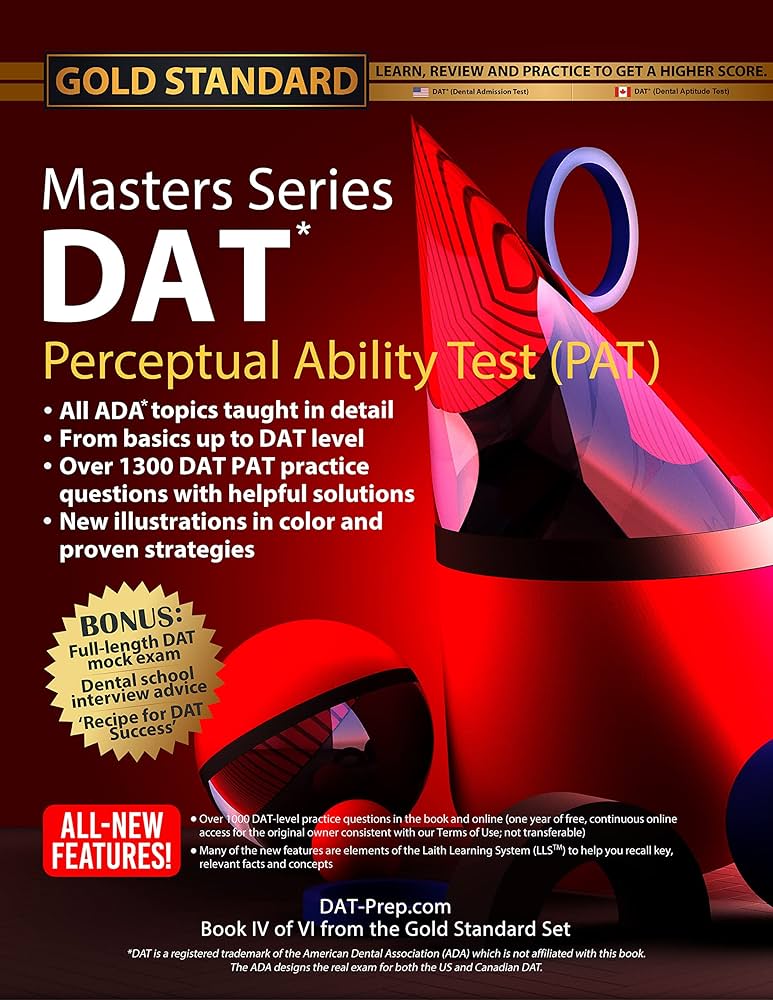


As an Amazon Associate, we may earn from qualifying purchases.
Common: what to check next
Essential study guides and prep materials
Success in dental school admissions hinges on two distinct phases: mastering the Dental Admission Test (DAT) and demonstrating a genuine grasp of dental anatomy. The preparation tools you choose should reflect this duality, offering rigorous academic review alongside tactile, visual learning resources.
DAT prep books and courses
The DAT is a standardized hurdle that dental schools use to gauge scientific aptitude. A structured review book remains the most reliable foundation for self-study. These guides break down the Natural Sciences section—covering biology, general chemistry, and organic chemistry—into manageable chapters with practice questions. Look for editions that include online access codes for digital question banks, as the exam format continues to evolve.
For students who need more structured accountability, online prep courses offer video lectures and scheduled study plans. These platforms often provide diagnostic exams to identify weak areas early. When selecting a course, prioritize those that offer specific strategies for the Perceptual Ability Test (PAT), as this section requires unique spatial reasoning skills that standard science review does not address.
Dental anatomy models and kits
Understanding craniofacial anatomy is critical for both the DAT’s PAT section and future clinical success. Physical dental anatomy models allow you to visualize tooth morphology, including cusp patterns and root structures, in three dimensions. This tactile experience is difficult to replicate through textbooks alone.
Many applicants use high-quality anatomical models to prepare for the PAT’s spatial visualization tasks. By physically rotating and examining these models, you can better understand how to interpret 2D projections of 3D objects. This hands-on approach builds the mental rotation skills necessary to ace the geometry and spatial relation questions on the exam.
Application resource guides
Beyond test scores, dental schools require a polished application portfolio. Dedicated application guides provide templates for personal statements, resume formatting, and interview preparation. These resources help you articulate your motivation for dentistry clearly and concisely, avoiding common pitfalls like overly technical jargon or generic anecdotes.
Investing in a reputable application guide ensures you understand the nuances of different dental school preferences. Some schools emphasize research experience, while others prioritize community service. A good guide helps you tailor your narrative to align with each school’s specific mission and values, strengthening your overall candidacy.
![DAT Prep Book 2024-2025 - DAT Exam Secrets Study Guide, Full-Length Practice Test, 75+ Online Video Tutorials: [6th Edition]](https://m.media-amazon.com/images/I/614QcuEZdnL._AC_UY654_QL65_.jpg)


As an Amazon Associate, we may earn from qualifying purchases.
Dentistry career paths and specialties
After earning a DDS or DMD, you face a choice between entering general practice immediately or pursuing advanced specialty training. General practice serves as the foundation for most dentists, focusing on comprehensive care including fillings, crowns, and preventive services. This path allows for immediate entry into the workforce, though many general dentists continue their education through continuing education courses to stay current with new technologies and techniques.
Specialization requires an additional two to six years of residency training beyond dental school. These programs are highly competitive and focus on specific areas of oral health. For instance, orthodontics involves aligning teeth and jaws, while oral and maxillofacial surgery focuses on complex procedures involving the mouth, jaw, and face. Other specialties include pediatric dentistry, endodontics, and periodontics, each requiring distinct skills and extensive clinical hours.
The decision to specialize often depends on your interest in a particular field, your willingness to commit to longer training, and your career goals. Specialized dentists typically earn higher salaries but also face higher educational debt and longer training periods. General practitioners may enjoy more flexibility in their practice hours and a broader scope of daily activities.
Specialty Training Overview
| Specialty | Additional Training | Focus Area |
|---|---|---|
| Orthodontics | 2-3 years | Teeth and jaw alignment |
| Oral Surgery | 4-6 years | Complex extractions and facial surgery |
| Pediatric Dentistry | 2-3 years | Dental care for children |
| Endodontics | 2-3 years | Root canal therapy |
| Periodontics | 3 years | Gums and supporting structures |
Choosing the right path involves understanding the demands and rewards of each option. General practice offers immediate patient interaction and business ownership opportunities, while specialties provide deeper expertise and often higher earning potential. Consider your strengths, interests, and long-term goals when making this important career decision.
Your dental school checklist
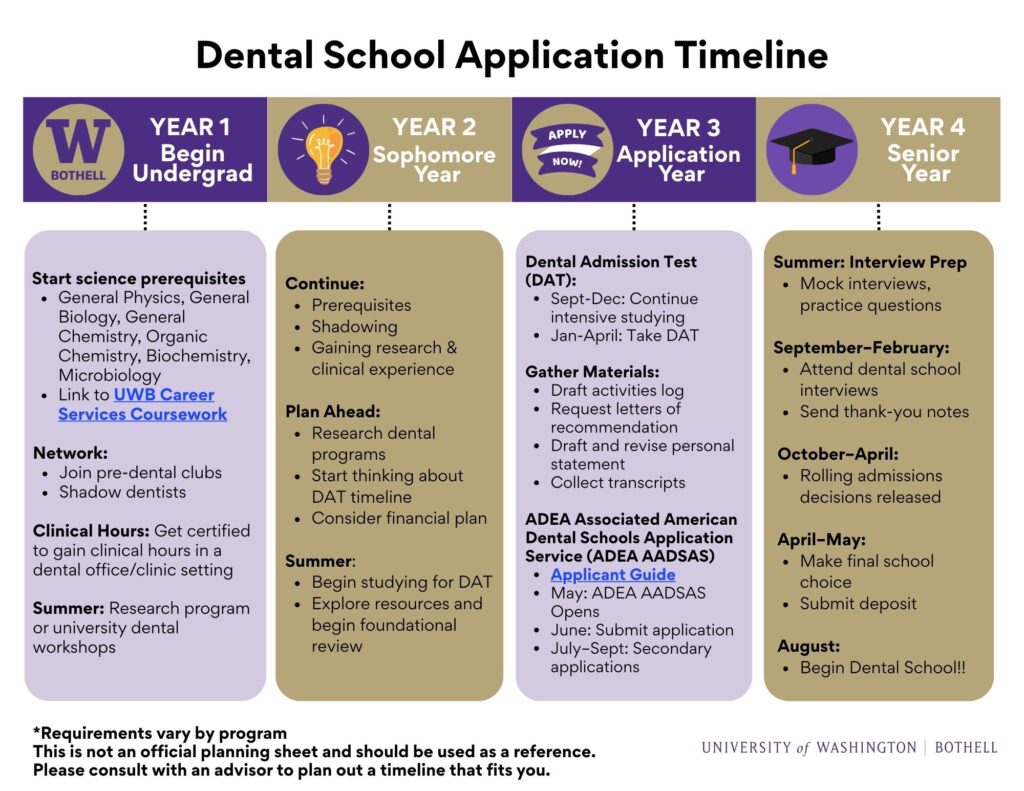
Admissions committees review thousands of applications, so your job is to make theirs easy. Treat your preparation like a project timeline rather than a wish list. By breaking the process into distinct phases, you can track exactly where you stand and identify gaps before they become problems.
Start by mapping out your academic prerequisites. Most schools require specific coursework in biology, general chemistry, organic chemistry, and physics, often with labs. Verify these requirements early, as they must be completed by the end of the spring semester before you matriculate. Use a degree audit tool to ensure every credit counts toward these specific mandates.
Next, schedule your standardized testing. The Dental Admission Test (DAT) is a major hurdle that requires months of dedicated study. Plan to take the exam when you have completed your core science prerequisites, typically during your junior year. A strong score can offset a slightly lower GPA, so prioritize preparation resources that match your learning style.
Finally, assemble your application materials. This includes your personal statement, letters of recommendation, and verified work or shadowing hours. Request letters from professors or dentists who know you well at least two months in advance. Keep a master folder of all documents, transcripts, and correspondence to stay organized throughout the cycle.

Review each school’s specific course requirements. Ensure you have completed biology, chemistry, organic chemistry, and physics with labs. Note any unique requirements like biochemistry or humanities credits.
Register for the Dental Admission Test. Dedicate 8-10 weeks to structured study using official ADEA resources. Focus on perceptual ability, reading comprehension, and quantitative reasoning.
Ask professors and dentists for letters of recommendation. Provide them with your resume and personal statement to help them write detailed, supportive letters. Submit these through the AADSAS service.
Complete your primary application via AADSAS. Double-check all transcripts and personal statements. Submit early in the cycle to maximize your chances of receiving interview invitations.


As an Amazon Associate, we may earn from qualifying purchases.
No comments yet. Be the first to share your thoughts!