

Dentistry in 2026: A Changing Field
Dentistry is changing. An aging population and new technology are reshaping dental care. Patients want more cosmetic procedures, implants, and preventative care. The field is embracing digital solutions and personalized treatment plans.
Technology is central to modern dentistry. Cone-beam computed tomography (CBCT) improves diagnostics, digital impressions replace messy molds, and AI assists in diagnoses. 3D printing creates custom surgical guides and temporary restorations. Dental school curricula are adapting to these technologies.
The Bureau of Labor Statistics projects 6% employment growth for dentists between 2022 and 2032, adding about 18,400 jobs. Job distribution is uneven, with shortages in rural and underserved areas. The median annual wage was $163,220 in May 2023, varying by specialty and location.
Becoming a dentist in 2026 demands a proactive, adaptable mindset. Skill with your hands isn't enough; you must be a lifelong learner, comfortable with technology, and committed to patient-centered care. The path is competitive, but rewarding.
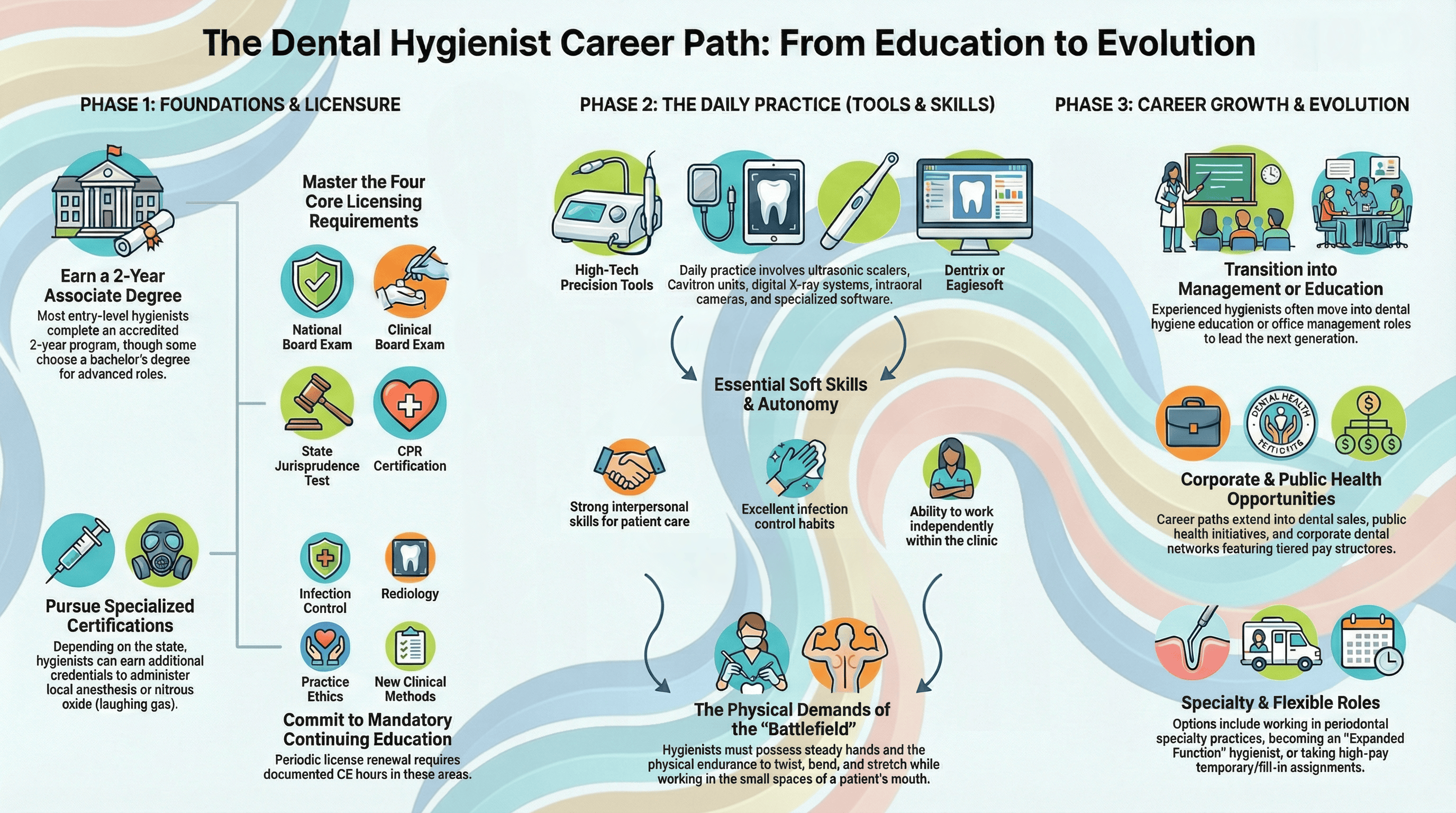
Prerequisites: Building Your Foundation
Dental school admissions are competitive, requiring a strong academic record. Your undergraduate coursework is the foundation. Most schools require a bachelor's degree, typically in a science field. Core science courses include general and organic chemistry, physics, and biology. Calculus and statistics are also almost universally required.
Consider courses like biochemistry, anatomy, and physiology. While not always required, they offer a significant advantage and prepare you for dental school's science curriculum. A high GPA is crucial; accepted applicants average around 3.6. The Dental Admission Test (DAT) is another hurdle, with a score of 20 or above considered competitive.
Relevant experience is as important as academics. Research experience, even non-dental, shows critical thinking. Shadowing dentists in various specialties is vital, demonstrating commitment and providing insight into daily practice. Aim for at least 100 hours of shadowing.
If your undergraduate degree isn't in science, a post-baccalaureate program can provide the necessary coursework. These programs can be formal or informal. Be prepared to demonstrate your academic ability.
- Biology: With lab
- General Chemistry: With lab
- Organic Chemistry: With lab
- Physics: With lab
- Calculus I & II
- Statistics
Dental School: The Application Process
The dental school application process is centralized through the Associated American Dental Schools Application Service (AADSAS). This allows you to submit one application to multiple schools. You'll create an AADSAS account and complete the online application with your demographic information, academic history, and extracurricular activities.
A strong application includes transcripts from all undergraduate institutions, DAT scores, a compelling personal statement, and letters of recommendation. Your personal statement explains your motivations and unique qualifications. Letters from science professors and dentists who have observed your shadowing are crucial.
The AADSAS application opens in May, with school deadlines typically in February or March. Apply early, as applications are reviewed on a rolling basis. Secondary, school-specific applications with additional essays are also common. The entire process, from submission to acceptance, can take six to twelve months.
Applying to dental school is expensive. The AADSAS application fee is $275 for the first school and $60 for each additional school. Secondary application fees range from $50 to $200 per school. The DAT exam costs about $550, plus travel for interviews. Budgeting is essential.
- AADSAS Application: Centralized application service.
- Transcripts: Official transcripts from all colleges attended.
- DAT Scores: Dental Admission Test scores.
- Personal Statement: A compelling essay outlining your motivations.
- Letters of Recommendation: From science professors and dentists.
The Cost of a Dental Education
Dental school is a significant financial investment. Tuition varies by institution type. In 2024, average annual tuition for in-state public dental schools was about $43,000, while private schools averaged $65,000.
Beyond tuition, factor in fees, books, supplies, and living expenses. Annual fees can range from a few hundred to several thousand dollars. Books and supplies can cost $1,000 or more yearly. Living expenses depend on location. A conservative estimate for the total cost of a dental education is $300,000 to $400,000.
Financial aid options include federal student loans, private loans, and scholarships. The ADEA offers a scholarship database, and state dental associations provide scholarships. Look for opportunities for students from underrepresented backgrounds.
Loan repayment programs can ease student debt. The National Health Service Corps Loan Repayment Program assists dentists practicing in underserved areas. Many states offer similar programs. Research these options to see if you qualify, as debt can impact career choices.
- Federal Student Loans: Stafford, Perkins, and Grad PLUS loans.
- Private Loans: Sallie Mae, Discover, and other lenders.
- ADEA Scholarships: Resources and database of scholarships.
- State Dental Association Scholarships: Opportunities within your state.
- National Health Service Corps: Loan repayment for practicing in underserved areas.
Dental School Curriculum: What to Expect
The dental school curriculum has two phases. The first two years cover basic sciences like anatomy, physiology, biochemistry, and microbiology. Preclinical studies involve practicing procedures on mannequins and learning dental materials and techniques. This lab-heavy phase requires significant commitment.
The last two years focus on clinical rotations, where you work with patients under faculty supervision. Rotations cover restorative dentistry, endodontics, periodontics, oral surgery, and pediatric dentistry. Opportunities also exist for community outreach and care for underserved populations.
Dental specialties allow focused training and career paths. Common specialties include general dentistry, orthodontics, periodontics, endodontics, oral and maxillofacial surgery, and pediatric dentistry. Each requires additional residency training after dental school.
Digital dentistry is increasingly integrated into the curriculum, with students learning digital scanners, CAD/CAM systems, and 3D printers for restorations. Licensure requires the National Board Dental Examinations (NBDE) and often
Specialty Paths: Finding Your Niche
Choosing a specialty is a significant decision. General dentists provide a wide range of dental services, from preventative care to restorative procedures. Orthodontists specialize in correcting misaligned teeth and jaws. Periodontists focus on the health of the gums and supporting structures of the teeth. Endodontists specialize in root canal therapy.
Oral and maxillofacial surgeons perform surgical procedures on the mouth, jaws, and face. Pediatric dentists provide dental care for children. The training requirements for each specialty vary, but all require additional years of residency after dental school. The job outlook for most specialties is good, with strong demand for qualified specialists.
Salaries also vary significantly by specialty. According to the ADA, oral and maxillofacial surgeons earn the highest average salary, followed by orthodontists and periodontists. General dentists typically earn the lowest average salary, but they also have the broadest scope of practice. Digital dentistry is emerging as a focused skillset, but isn't yet a formally recognized specialty in most places.
Public health dentistry is another important area. Public health dentists work to improve the oral health of communities, often focusing on underserved populations. They may work in government agencies, non-profit organizations, or community health centers. This path offers a unique opportunity to make a significant impact on the oral health of others.
- General Dentistry: 4 years of dental school
- Orthodontics: 2-3 years of residency after dental school
- Periodontics: 3 years of residency after dental school
- Endodontics: 2 years of residency after dental school
- Oral & Maxillofacial Surgery: 4-6 years of residency after dental school
- Pediatric Dentistry: 2 years of residency after dental school
Qualitative Comparison of Dental Specialties (2026 Outlook)
| Dental Specialty | Patient Interaction | Technical Skill | Income Potential | Work-Life Balance | Research Opportunities |
|---|---|---|---|---|---|
| General Dentistry | High | Medium | Medium | Medium | Low |
| Orthodontics | Medium | High | High | Medium | Medium |
| Oral and Maxillofacial Surgery | Medium | High | High | Low | High |
| Pediatric Dentistry | High | Medium | Medium | Medium | Medium |
| Periodontics | Medium | High | Medium | Medium | Medium |
| Endodontics | Medium | High | Medium | Medium | Medium |
| Prosthodontics | Medium | High | Medium | Medium | Medium |
| Public Health Dentistry | High | Medium | Low | High | High |
Illustrative comparison based on the article research brief. Verify current pricing, limits, and product details in the official docs before relying on it.
Licensure and Beyond: Starting Your Practice
After graduating from dental school, you’ll need to obtain a dental license to practice. The requirements for licensure vary by state. In California (dbc.ca.gov), for example, you’ll need to pass the National Board Dental Examinations, the California Regional Clinical Examination, and a jurisprudence exam. You’ll also need to submit an application and pay a licensing fee.
Continuing education is essential for maintaining your license. Most states require dentists to complete a certain number of continuing education credits each year to stay up-to-date on the latest advancements in the field. These credits can be earned through courses, conferences, and other educational activities.
Once licensed, you have several options for starting your practice. You can join an existing group practice, start your own solo practice, or work for a corporate dental organization. Each option has its own advantages and disadvantages. Starting your own practice requires significant investment and business acumen.
Running a dental practice involves more than just providing dental care. You’ll need to manage finances, hire and train staff, market your services, and comply with regulations. Understanding the business aspects of dentistry is crucial for success. It’s a demanding profession, but one that offers significant rewards.
Resources and Further Exploration
Aspiring dentists have a wealth of resources available to them. The American Dental Education Association (ADEA) (adea.org) is a valuable resource for information on dental school admissions, financial aid, and career development. The American Dental Association (ADA) (ada.org) provides resources for practicing dentists, including continuing education courses and practice management tools.
State dental associations offer local resources and networking opportunities. Many states also have pre-dental societies and organizations that provide support and guidance to students interested in pursuing a dentistry career. Scholarship databases like those offered by Sallie Mae and Fastweb can help you find funding for your education.
Explore websites like the Health Resources and Services Administration (HRSA) for information on loan repayment programs for dentists practicing in underserved areas. Don’t hesitate to reach out to current dentists and dental students for advice and mentorship. Their insights can be invaluable as you navigate the path to becoming a dentist.
Ultimately, becoming a dentist requires dedication, hard work, and a passion for oral health. By utilizing these resources and preparing thoroughly, you can increase your chances of success and embark on a rewarding career.
- ADEA (American Dental Education Association):
- ADA (American Dental Association):
- dbc.ca.gov (Dental Board of California):
- HRSA (Health Resources and Services Administration):

No comments yet. Be the first to share your thoughts!